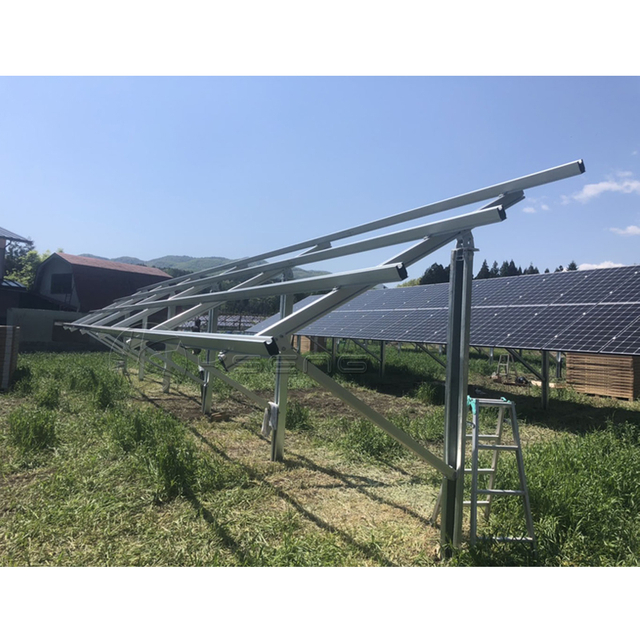
Views: 0 Author: Site Editor Publish Time: 2026-09-23 Origin: Site


Many assume solar panels belong exclusively on a roof. Yet, this default placement isn't always optimal. Ground arrays offer a strategic alternative for properties demanding high energy output. Often, rooftops present serious physical constraints. You might face poor sun orientation, heavy shading from tall trees, restrictive structural weight limits, or aging shingles. These issues severely cap your energy generation potential.
While ground systems do require dedicated land and distinct civil work, they deliver clear, measurable gains. By choosing an open plot, you secure higher energy yields. You also gain much easier maintenance access and virtually unrestricted system scalability. If you have the land, stepping off the roof might be your best energy move. We will explore how foundation choices and strategic placement maximize your long-term returns below.
Ground mounted systems typically yield higher energy production due to optimal tilt, orientation, and passive cooling.
They bypass rooftop structural constraints, making system size scalable to actual energy consumption needs.
Upfront costs are generally higher due to trenching and foundation work, but long-term ROI often outpaces rooftop systems through higher efficiency.
Material and structural choices (e.g., Aluminum, Zn-Al-Mg, Pile, Adjustable mounts) dictate site compatibility and installation speed.
Most solar buyers instinctively look up. Roofs provide unused square footage, making them a natural starting point. However, rooftops often force significant engineering compromises. The baseline problem stems from architectural limits. Your roof dictates the azimuth, or compass direction, of your solar array. If your roof faces east or west, you automatically lose a percentage of peak solar generation.
Furthermore, residential and commercial roofs often feature obstructions. Chimneys, HVAC units, and exhaust vents eat up valuable space. They also cast shifting shadows across the panels throughout the day. Structural weight limits add another barrier. Many older buildings cannot safely support the dead load of a massive solar array.
These limitations create a hidden opportunity cost. When a rooftop system cannot meet your total energy demand, you remain reliant on grid power. Buying expensive grid electricity for your unfulfilled energy needs extends your system's payback period. You end up saving less money each month.
Positioning a ground array flips this dynamic. The ground mount solution prioritizes maximum yield over maximizing existing real estate. You place the panels exactly where they will perform best. You stop battling architectural constraints. Instead, you design a system scaled precisely to your consumption habits, ensuring you achieve true energy independence faster.
Moving your solar investment to an open plot unlocks several structural and operational benefits. The sheer control you gain over the system's design makes it a highly attractive option.
Roofs force you to adapt to existing pitches and angles. Ground arrays let you dictate the terms. You can align panels precisely south, or to your ideal local orientation, capturing maximum sunlight. You also set the perfect fixed tilt based on your exact latitude. This independent alignment directly increases daily energy production. You harvest more kilowatt-hours per installed panel compared to a compromised rooftop setup.
Solar panels prefer cold, bright conditions. When silicon cells heat up, their voltage drops, reducing overall electrical output. Rooftop panels sit inches above hot asphalt or metal, trapping heat underneath. Ground installations benefit from enhanced thermal efficiency. Open space allows breezes to flow freely beneath the racking structure. This passive cooling keeps the silicon cells significantly cooler. Lower operating temperatures reduce thermal degradation and maintain high output efficiency during hot summer months.
Maintaining a roof array involves ladders, safety harnesses, and fall-protection gear. Ground arrays simplify this process entirely. You can walk right up to the panels. This ground-level access drastically speeds up routine maintenance. You can safely wash away dust, pollen, and bird droppings. In colder climates, snow removal becomes a quick, safe task. Keeping panels clean directly protects your energy yield.
Perhaps the most significant of the advantages of ground mounted solar panels is sheer scalability. Your system size is limited only by your land boundaries and your budget. You no longer worry about running out of roof square footage. This makes ground mounts incredibly popular for high-usage commercial facilities, agricultural operations, and large residential estates. You build the exact system size you need to offset your utility bill entirely.
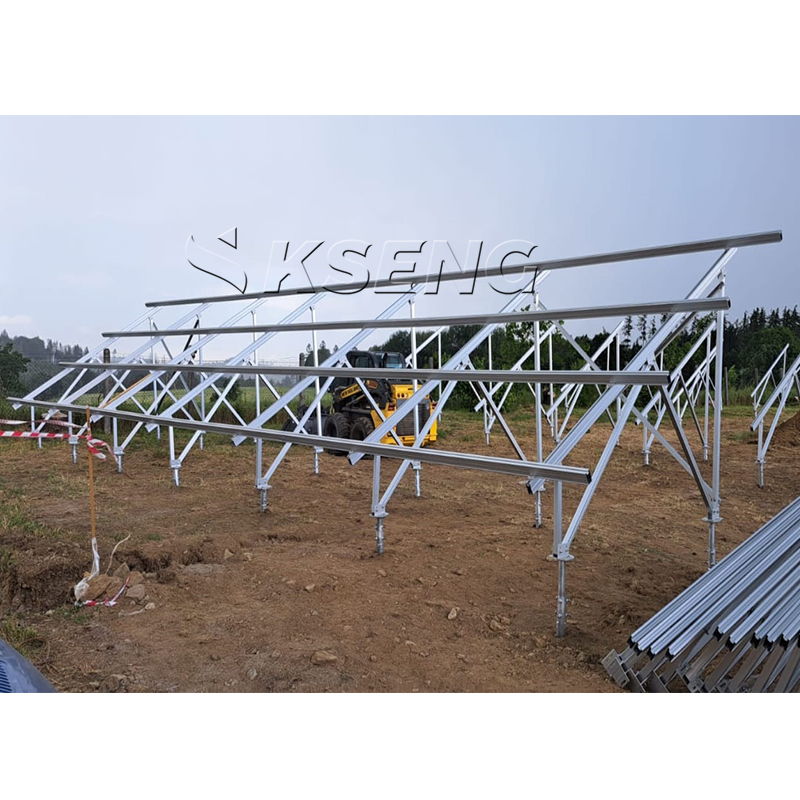
Ground arrays require a robust substructure. You cannot simply place panels on the grass. Soil types, local weather conditions, and budget realities will dictate your foundation choice. Selecting the correct racking ensures your system survives decades of wind, rain, and snow.
Comparison of Ground Mount Substructures
| Mount Type | Material Resilience | Ideal Environment | Installation Speed |
|---|---|---|---|
| Aluminum | High corrosion resistance | Standard soils, moderate climates | Very Fast |
| Zn-Al-Mg | Self-healing, extreme durability | Coastal, high salinity, industrial | Moderate |
| Pile Driven | High structural stability | Uneven terrain, variable soils | Fast (No concrete) |
| Adjustable | Flexible mechanical joints | Regions with distinct seasons | Moderate |
Aluminum remains a highly popular choice for standard installations. An Aluminum Ground Mount Rack is exceptionally lightweight. Installers can move and assemble these racks quickly, which lowers labor costs. Aluminum naturally resists corrosion, making it a reliable choice for moderate climates and standard soil conditions. Its pre-assembled nature often cuts down on site preparation time.
Harsh environments demand tougher materials. If you live near the ocean or in an industrial zone, standard steel might rust. A Zn-Al-Mg Ground Mount solves this problem. This advanced zinc-aluminum-magnesium coating features self-healing properties. If the metal gets scratched, the coating naturally oxidizes to seal the breach. It prevents long-term degradation, making it essential for high-salinity areas where equipment lifespan is a critical concern.
Pouring concrete is expensive and time-consuming. You must wait for it to cure, which delays the project. A Pile Ground Mount bypasses this step entirely. Installers drive heavy steel posts directly into the earth using specialized machinery. This method eliminates heavy concrete foundation work. It expedites installation and significantly reduces land scarring. Piles are ideal for uneven terrain or sites with variable soil compositions.
The sun sits higher in the sky during summer and lower during winter. A fixed-tilt system compromises between these two extremes. An Adjustable Ground Mount allows for manual seasonal tilt adjustments. By changing the angle a few times a year, you capture higher peak seasonal yields. It offers a highly cost-effective middle ground between rigid fixed-tilt racks and expensive motorized tracking systems.
Ground projects require careful planning. They introduce civil engineering elements you rarely encounter with rooftop systems. Understanding these realities upfront prevents budget overruns.
Your solar panels generate direct current (DC) electricity. This power must travel to your main electrical panel to be converted and used. Ground mounts require underground conduit runs. You must dig a trench from the array location to your house or facility. Trenching adds direct labor and equipment costs to your initial budget. You must also map out existing underground utilities to avoid accidental strikes during excavation.
Your soil composition dictates your foundation strategy. You cannot guess what lies beneath the topsoil. A localized geotechnical soil test is absolutely necessary. If your land features heavy bedrock, driving piles might be impossible. You might require expensive concrete ballasts instead. Conversely, loose, sandy soil might lack the friction needed to hold standard driven posts, requiring deeper embedment. Knowing your soil profile prevents mid-project redesigns.
Local governments treat ground arrays differently than roof arrays. Because ground mounts occupy physical land, they trigger distinct zoning laws. You must account for property line setbacks. Jurisdictions often require the array to sit a specific distance away from fences or neighboring lots. Furthermore, Homeowner Associations (HOAs) or environmental protection boards might enforce strict visual or land-use restrictions. Secure your local zoning approvals long before purchasing equipment.
Deciding between a roof and a ground setup requires a clear, analytical approach. You need to balance upfront costs against long-term generation potential.
Use this checklist to determine if a ground setup fits your property:
Available Unshaded Acreage: Do you have a flat, open space that remains completely unshaded from 9 AM to 3 PM year-round?
Distance to the Electrical Meter: Is the proposed site reasonably close to your main panel? Distances over 200 feet require thicker, more expensive copper wiring to prevent voltage drop.
Energy Consumption vs. Roof Capacity: Calculate your annual energy usage. Can your roof physically hold enough panels to meet that number? If not, ground placement becomes highly logical.
Ground systems carry a higher initial capital expenditure (CAPEX). You are paying for trenching, specialized mounting hardware, and civil labor. However, you must evaluate this against operational expenditure (OPEX) savings. Because ground systems enjoy optimal tilt and cooler operating temperatures, they generate more kilowatt-hours per panel. This higher generation translates into larger utility bill savings. Over a 25-year lifespan, this accelerated ROI often heavily outweighs the initial trenching costs.
Do not rely on satellite imagery alone. Schedule an in-person, localized site assessment. Specifically request a geotechnical review of your soil. Ask the engineering team to perform a detailed shading analysis of the proposed plot. These two steps will confirm whether your land is viable for a heavy-duty energy asset.
Ground mounted solar panels offer unparalleled control over your energy production. You completely bypass restrictive roof angles, shading issues, and structural weight limits. By optimizing your system's orientation and taking advantage of passive cooling, you guarantee higher energy yields year after year.
While the initial installation demands thorough civil work, soil testing, and trenching, the financial math remains strong. The sheer scalability of an open-plot array allows you to offset massive energy bills entirely.
Your next step is clear. Consult with a qualified engineering or installation team to evaluate your soil viability. Discuss which structural mounting options best fit your local climate and property layout to maximize your long-term returns.
A: Yes, they typically cost 10-20% more upfront. This increase stems from trenching, structural materials, and required foundation work. However, their higher operational efficiency often offsets these initial costs over the system's lifespan.
A: The exact footprint varies by your specific energy needs. Generally, you require about 100 square feet per kilowatt (kW) of installed capacity. You must also account for mandatory local zoning setbacks and spacing between panel rows.
A: Not always. Pile Ground Mounts are driven directly into the earth without using concrete. However, this method's feasibility depends entirely on a localized geotechnical soil test to ensure the ground provides adequate structural friction.
A: Yes. Systems built with materials like Zn-Al-Mg and engineered for local wind and snow load ratings are highly resilient. They often outperform older residential roofs during severe weather events due to their heavy-duty structural framing.