
Views: 0 Author: Site Editor Publish Time: 2026-09-30 Origin: Site


Calculate the Levelized Cost of Energy (LCOE) for a new solar array. You must know its operational lifespan first. This timeframe dictates your long-term ROI. Many developers focus only on the modules. They ask about photovoltaic cell warranties. But panels represent just one piece of the equation. You must also consider the structural integrity of the mounting system. To maximize your ground mounted solar panels lifespan, you have to look deeper. Evaluating photovoltaic modules is only the start. You need the right racking materials. You must select suitable foundation types. You also have to mitigate site-specific environmental stressors. In this guide, you will learn how material choices impact system longevity. We will break down degradation rates, structural warranties, and environmental compliance.
Standard Tier-1 solar panels last 25–30+ years before degrading below 80% efficiency, but they rarely fail abruptly; they simply produce less power.
The true bottleneck for ground-mounted longevity is often the racking and foundation materials, which must endure decades of soil chemistry and weather exposure.
Upgrading to advanced corrosion-resistant racking (like Zn-Al-Mg steel) and selecting the correct foundation for your soil type can extend the system's structural life to match or exceed the panel warranties.
End-of-life planning and environmental compliance (e.g., EPA/DOE guidelines) should be factored into the initial project evaluation phase.
Industry standards define the useful life of solar panels as 25 to 30 years. Panels do not suddenly stop working at year 30. They simply generate less power. They continue operating at a reduced capacity. Most manufacturers set the end of useful life at the 80% original output threshold. Once an array dips below this line, its commercial viability drops.
Modern N-type and P-type monocrystalline panels show impressive durability. You can expect annual degradation rates between 0.4% and 0.5%. This gradual decline results from prolonged UV exposure and continuous thermal cycling. It means a high-quality panel will likely produce 85% to 87% of its rated power after 25 years.
You must clearly understand the difference between product and performance warranties. Product warranties cover manufacturing defects. They protect you against premature failures. These warranties typically last 12 to 25 years. Performance warranties do something entirely different. They guarantee a specific output percentage at year 25. If the panels degrade faster than promised, the manufacturer compensates you.
Real-world risks often accelerate degradation far beyond laboratory baselines. Micro-cracking remains a significant threat. Installers can inadvertently cause micro-cracks during rough handling. Extreme weather events also inflict hidden damage. These tiny fractures restrict electron flow. They create localized hot spots. These hot spots degrade the panel much faster than standard models predict. You must enforce strict handling protocols during installation.
Specify N-type modules for commercial projects to achieve lower annual degradation.
Conduct Electroluminescence (EL) imaging post-installation to detect hidden micro-cracks early.
Monitor string-level performance monthly to catch hot spots before they spread.
Mounting hardware dictates structural survival. Failing racking requires complete system decommissioning. This makes material selection a critical ROI variable. If the underlying steel rusts away, the high-efficiency panels become useless. You must match your racking material to your local climate and soil conditions.
Consider an Aluminum Ground Mount Rack for high-humidity areas. Aluminum offers exceptional natural corrosion resistance. It forms a protective oxide layer when exposed to oxygen. It remains lightweight and requires very low maintenance. We strongly recommend aluminum for coastal environments. Salt spray destroys traditional metals quickly. Aluminum resists this specific threat beautifully.
For large-scale utility projects, a Carbon Steel Ground Mount provides a cost-effective solution. It delivers excellent high tensile strength. However, it carries distinct operational risks. Carbon steel requires thick hot-dip galvanization to survive outdoors. It becomes highly vulnerable to rapid rusting if installers scratch the zinc coating. Highly acidic soil also eats through standard galvanization rapidly.
To bridge the gap between cost and durability, evaluate a Zn-Al-Mg Steel Ground Mount. This material blends zinc, aluminum, and magnesium. It offers superior self-healing coating technology. If the surface gets scratched, the surrounding coating migrates to cover the exposed steel. It provides up to three times the corrosion resistance of traditional galvanized steel. The higher upfront cost lowers maintenance CAPEX. It extends the structural lifespan significantly in harsh environments.
Material Selection Comparison
| Material Type | Primary Advantage | Main Risk Factor | Ideal Environment |
|---|---|---|---|
| Aluminum | Maximum corrosion resistance | Higher initial procurement cost | Coastal or high-humidity regions |
| Carbon Steel | High tensile strength, low cost | Vulnerable to scratching and acidic soil | Dry, benign inland climates |
| Zn-Al-Mg Steel | Self-healing anti-corrosion properties | Premium pricing over standard steel | Harsh industrial or agricultural sites |
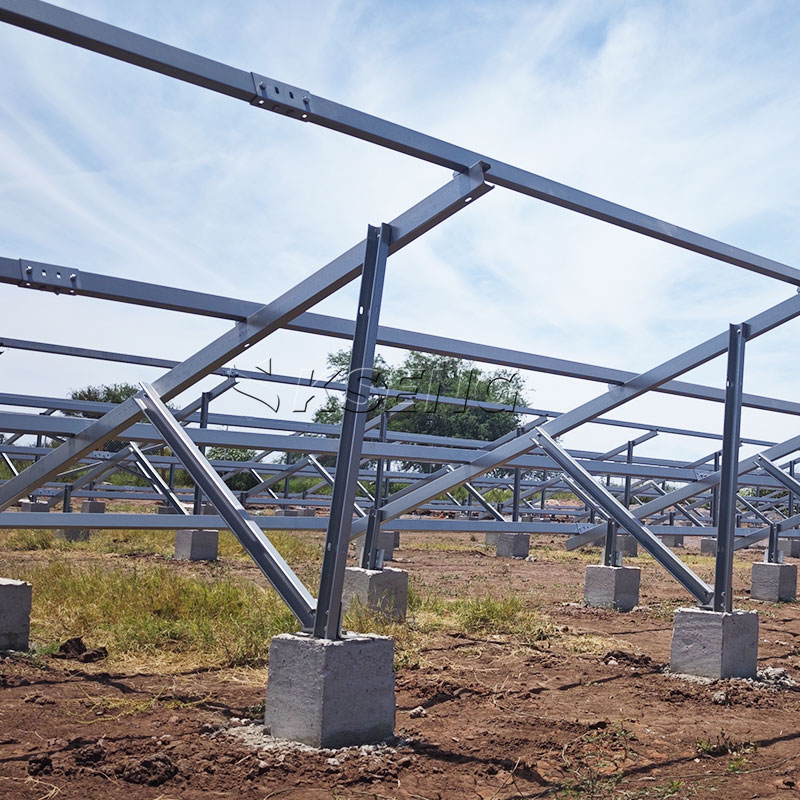
Even the best racking will fail if the foundation shifts. Subsurface stability governs long-term alignment. Soil chemistry, frost heave, and erosion threaten structural integrity daily. High salinity soils corrode buried metals aggressively. You cannot ignore subsurface conditions during the planning phase.
Using a Concrete Foundation Ground Mount delivers maximum stability. It works exceptionally well in loose, rocky, or non-cohesive soils. Concrete prevents direct metal-to-soil contact. This separation mitigates soil-based galvanic corrosion entirely. However, concrete carries specific risks. Extreme freeze-thaw cycles can crack the footings over time. Concrete also demands higher installation labor. It requires longer curing times before you can mount the metal racks.
Alternative foundations include driven metal piles and helical screws. Driven piles install very quickly. They cost significantly less than poured concrete. But they expose bare metal directly to the soil. You must obtain a comprehensive geotechnical soil report prior to procurement. This report identifies acidity levels, moisture content, and bedrock depth.
The geotechnical report prevents premature foundation failure. Failing to test the soil ranks as a top industry mistake. If you drive standard galvanized piles into highly acidic soil, they will rust away in under ten years. You will face catastrophic array failure long before the panels degrade.
Skipping the geotechnical pull-test before finalizing the engineering drawings.
Using shallow concrete footings in regions with deep frost lines.
Ignoring site drainage patterns, leading to severe topsoil erosion around the mounts.
Ground mounts face unique risks compared to roof mounts. Their proximity to ground level exposes them to daily physical hazards. You must plan for these operational stressors to ensure a 30-year operational life.
Vegetation management requires constant attention. Weed overgrowth causes immediate shading issues. Shading triggers bypass diodes, which dramatically reduces overall string output. Overgrowth also traps moisture against the panels and racking. This localized humidity creates destructive micro-climates beneath the array. It accelerates component wear. It also encourages stubborn fungal growth on the panel glass.
Physical damage happens frequently at ground level. Wildlife interference poses a constant threat. Rodents chew through exposed copper wiring. Large animals can damage module edges. Lawn maintenance activities also cause severe problems. Mowers and weed trimmers easily throw rocks into the tempered glass. You should establish a clear perimeter. Use crushed gravel or heavy weed barriers to reduce maintenance proximity.
Load engineering determines long-term structural fatigue. Dynamic wind loads push and pull the array repeatedly. Static snow loads press down heavily on the frames for months. Over decades, this constant stress flexes the metal. You must torque all bolts to exact manufacturer specifications. Loose fasteners amplify wind vibration. This vibration causes invisible micro-cracks inside the silicon cells, ruining efficiency.
Every solar project eventually reaches its end of life. You must frame decommissioning through proper regulatory lenses. The EPA (Environmental Protection Agency) and DOE (Department of Energy) provide strict management guidelines. You must manage hazardous waste and recycling correctly.
The repowering decision typically arrives between year 20 and 25. Older panels still produce power. But modern panels offer nearly double the efficiency. You must calculate the financial threshold carefully. Replacing degraded panels often makes more financial sense than squeezing out the final five years. If you installed durable racking initially, you can reuse the structure. This improves the repowering ROI immensely.
Recyclability heavily influences future compliance costs. Aluminum frames recycle easily and hold value. Glass recycles well but requires specialized separation processes. Heavy metal racking components retain high scrap value. However, the solar cells themselves contain trace heavy metals like lead and cadmium. You must factor environmental impact into your initial project planning.
Some local jurisdictions now mandate end-of-life recycling bonds before construction even begins. Failing to plan for decommissioning costs disrupts long-term financial models. Always design the system with easy disassembly in mind.
You need a systematic approach to ensure maximum system life. Guesswork leads to structural failures. Use this outcome-focused criteria to shortlist EPCs (Engineering, Procurement, and Construction firms) and material suppliers.
Mandate a geotechnical soil test immediately. Do this before ordering any materials. The soil chemistry dictates your foundation type and racking coating requirements.
Align your racking material with site climate data. Choose aluminum for coastal salinity. Select advanced self-healing steel for harsh industrial environments. Use standard carbon steel only in benign, dry climates.
Review the fine print on Tier-1 warranties. Compare the panel performance warranty against the structural warranty of the mounting system. They should match in duration perfectly.
Factor operations and maintenance costs into your 25-year financial model. Include bi-annual cleaning, vegetation clearing, and mechanical torque checks.
Follow these steps to protect your investment. Hardware failures usually stem from skipped steps during the initial planning phase. Do not rush the soil testing or material selection process.
Ground-mounted solar panels will easily last 25 to 30 years. They deliver reliable clean power for decades. However, the supporting infrastructure must survive the exact same timeline. Photovoltaic modules only perform well if they remain securely attached to the earth.
Do not compromise on foundation engineering. Avoid downgrading your racking materials just to save on initial capital expenditure. Specifying advanced coatings or marine-grade aluminum protects your long-term returns. Structural failure negates the ROI of high-efficiency solar modules. Build the foundation right, manage the environment, and your solar array will generate profitable energy for a generation.
A: Yes, they often perform better long-term. Ground mounts enjoy superior airflow beneath the array. This allows the panels to run significantly cooler. Lower operating temperatures marginally reduce thermal degradation over decades. Roof-mounted panels trap heat against the shingles, which can accelerate cell wear.
A: You should expect a 10% to 15% drop in total efficiency after 20 years. This aligns with the standard 0.5% annual degradation rate seen in modern monocrystalline panels. The panels will still produce substantial power, just at a slightly reduced capacity.
A: Yes, this process is called repowering. It becomes highly viable if you initially chose a durable racking system. Upgraded materials ensure the structure outlasts the original panels. You must verify that the new panel dimensions remain compatible with your existing mounting hardware.
A: You must perform bi-annual torque checks on all structural bolts to prevent wind vibration. Strict vegetation control prevents shading and localized humidity. Finally, conduct regular visual inspections to identify micro-cracks or loose wiring before they cause significant energy losses.





