Views: 0 Author: Site Editor Publish Time: 2026-06-08 Origin: Site


For utility-scale and commercial PV plants, relying on static algorithms leaves significant energy yield on the table. Standard Solar Position Algorithms often struggle during suboptimal weather. They also underperform across uneven terrain. The transition from time-based, pre-programmed tracking to dynamic, AI-driven control changes the paradigm entirely. It shifts your focus from simply following the sun to proactively managing unpredictable environmental variables. We can now control shading and bolster asset protection in real time. The gap between basic mechanical mounts and smart infrastructure is widening fast. Evaluating a modern solar panel tracking system requires looking far beyond basic mechanical specs. You must understand how neural networks, edge AI, and sensor fusion drive verifiable ROI. They reduce severe operational risks while interacting seamlessly with the physical realities of your specific site.
Yield Optimization Beyond Clear Skies: AI models maximize energy capture on cloudy days by targeting diffuse irradiance (GHI) rather than just direct sunlight (DNI), empirically showing yield increases of up to 7.8% in multi-cloudy conditions.
Decentralized, Row-Specific Control: Smart trackers treat each row as an independent unit, dynamically adjusting to localized shading and complex topographies to eliminate row-to-row energy bottlenecks.
Proactive Asset Defense: Integrated AI systems trigger automated stow protocols (wind, snow, hail) based on real-time and predictive meteorological data, protecting the hardware while minimizing downtime.
Traditional tracking systems rely on basic astronomical formulas. We call this the Solar Position Algorithm (SPA). These legacy setups look strictly at the sun's predicted path. They fail completely when moving cloud cover rolls in. They also ignore terrain-induced shading and unique bifacial module properties. When clouds block direct sunlight, the standard algorithm still blindly faces the hidden sun. Upgrading to an intelligent solar tracker system solves these critical blind spots.
To measure true performance, we must look at how algorithms capture diffuse light. Direct Normal Irradiance (DNI) drops sharply during cloudy weather. However, Global Horizontal Irradiance (GHI) remains available through scattered light. Machine learning models map different sky sectors continuously. They optimize panel angles to catch this scattered light during overcast days. Empirical data shows this strategy dramatically boosts baseline energy generation.
Bifacial synergy adds another layer of performance. Standard trackers optimize purely for the front glass. Synchronizing AI positioning for bifacial panels amplifies rear-side light capture. The AI analyzes ground albedo alongside diffuse rear irradiance. You multiply your total energy yield without expanding your site footprint.
We must also address skeptical considerations. Vendors often advertise massive maximum yield increases. However, your actual baseline improvement depends heavily on site geography. Microclimates and baseline tracking methods matter immensely. Flat, highly sunny regions naturally see smaller gains compared to cloudy, uneven terrain.
| Feature | Standard SPA Tracker | AI-Driven Tracker |
|---|---|---|
| Cloudy Day Strategy | Follows hidden sun | Targets diffuse irradiance |
| Row Adjustments | Uniform array movement | Decentralized row-level control |
| Shading Response | Passive/None | Dynamic backtracking |
Effective AI implementation requires an undeniable convergence. You need robust mechanics combined seamlessly into low-latency data processing. A smart tracking platform falls flat if its physical actuators fail under pressure. You cannot mount sophisticated neural networks onto fragile steel.
Mechanical reliability remains your foundation. We recommend looking for maintenance-free components capable of enduring harsh climates. Dual-sealed slew-drives and self-lubricating bearings perform exceptionally well over decades. High-density packaging also reduces site soil disturbance. It cuts down your initial deployment time significantly, getting the plant online faster.
The sensor integration layer gives the system its operational eyes. Modern setups utilize precision pyranometers and high-resolution sky-imaging cameras. They also deploy IoT environmental sensors across the field. These components feed real-time weather data directly into the control unit. The cameras identify cloud density and velocity instantly.
Processing this heavy data requires immediate computational power. This is where Edge AI proves its worth. Processing data at the edge means on-site controllers handle the heavy mathematical calculations locally. It ensures millisecond-level response times under 20ms. You get critical positioning adjustments instantly. You minimize your reliance on continuous cloud connectivity. Your solar tracker operates flawlessly even when external network connections drop.
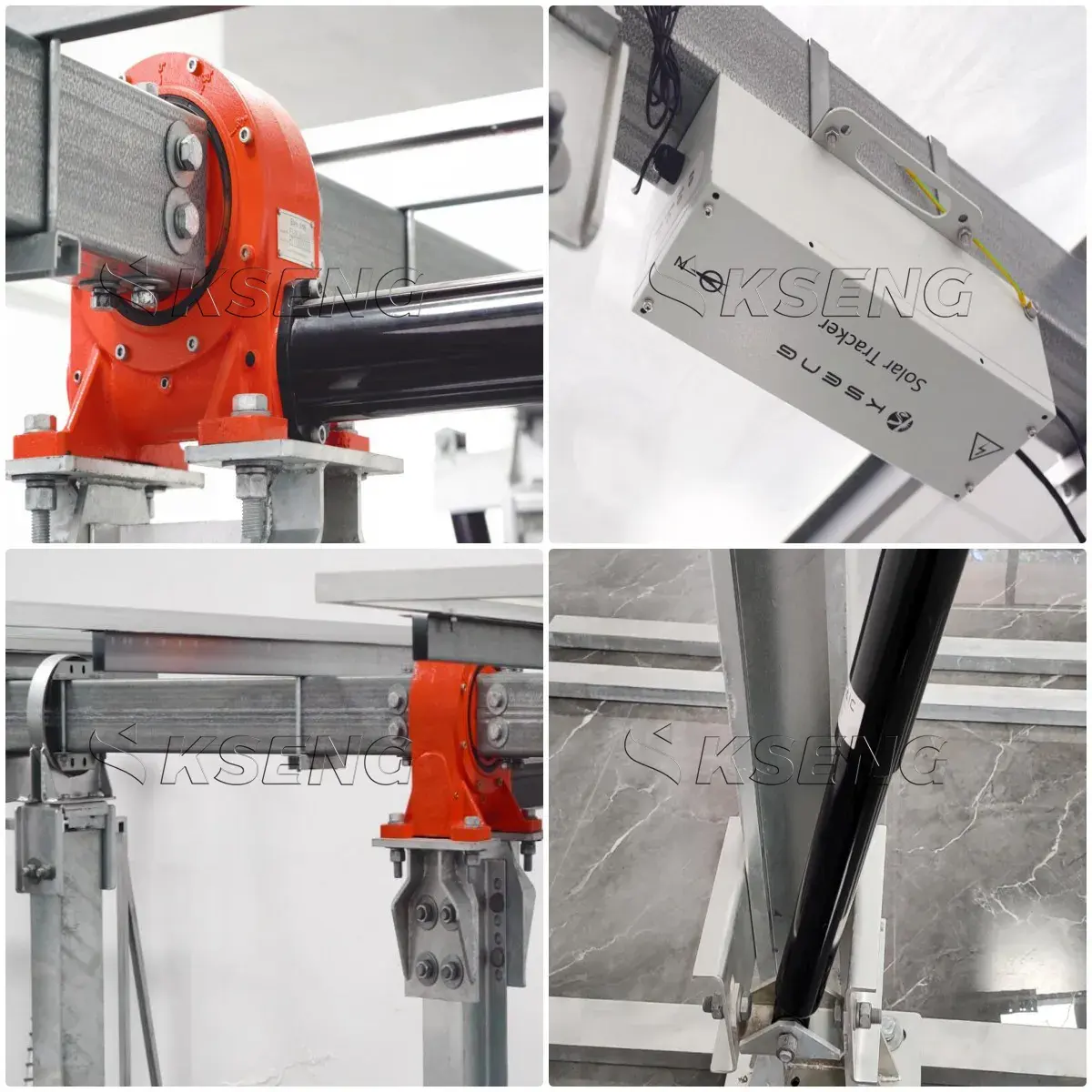
Large-scale solar farms rarely sit on perfectly flat land. Topographical challenges plague standard algorithms constantly. Sloped terrain creates uneven shading across different blocks as the sun moves. AI models tackle this by adjusting individual rows independently. They use row-specific performance models rather than moving the entire array uniformly. This decentralized approach stops one shaded row from dragging down an entire string's voltage.
Tuned backtracking strategies solve severe energy losses. Consider the dawn and dusk problem. At low sun angles, standard tracking casts long shadows on adjacent rows. The AI solution leverages advanced machine learning models. Networks like Random Forest or Long Short-Term Memory (LSTM) calculate optimal reverse-tracking angles. They process historical shading data alongside seasonal sun path shifts.
Here are the key benefits of implementing AI-tuned backtracking:
It ensures zero row-to-row shading during critical low-sun hours.
It maintains the maximum possible power output continuously.
It adapts dynamically to seasonal sun path variations.
Managing real-time shading becomes effortless under this framework. Decentralized architectures allow single rows to react independently. They adjust rapidly for fast-moving cloud shadows. Your single axis solar tracker no longer waits for a master command from a central server. It optimizes its own micro-environment immediately.
Catastrophic weather events pose massive business risks to plant operators. Hail, high winds, and heavy snow lead the industry in massive asset loss. An intelligent solar energy tracker must double as a strict defensive mechanism. It cannot just maximize yield; it must protect your underlying capital.
Defensive positioning protocols save millions in hardware damages. The system categorizes incoming meteorological threats and responds accordingly using predictive modeling:
Wind Stow: The system applies aerodynamic leveling. It moves panels to a flat angle. This prevents structural torsion during sudden gusts.
Hail Stow: The algorithm rapidly shifts the array. It targets high-incline angles. This minimizes the direct impact force of large hailstones against the glass.
Snow Stow: Trackers tip panels to their maximum allowable angle. This automated snow shedding prevents overwhelming weight accumulation.
Resilience during grid outages separates elite systems from standard ones. Best-in-class platforms utilize self-powered controllers paired with dedicated battery backups. They integrate local network control units communicating via mesh networks. You maintain tracking and protective stow capabilities perfectly. You stay protected even when the main power grid goes down entirely during a severe hurricane.
Choosing the right vendor demands a strict evaluation framework. You must verify hardware-to-software interoperability immediately. Does the vendor force a closed ecosystem? Can their AI software integrate smoothly alongside your existing plant controllers and third-party inverters? Open architectures often provide better long-term flexibility for asset managers.
Predictive maintenance requires software transparency. Plant operators despise black box solutions. Evaluate whether the platform offers Explainable AI dashboards. Operators must trace exactly why an algorithm made a specific positioning decision. Look for predictive maintenance features built directly into the UI. They should forecast actuator wear accurately based on historical motor strain. They must predict panel faults before total failure occurs.
Implementation and rollout risks need careful assessment before signing contracts. You must evaluate these specific factors thoroughly:
Modularity: Trackers offering high pre-assembly rates significantly cut field labor costs and installation errors.
Security: Data privacy and network security compliance remain non-negotiable for connected IoT components.
Support: Localized maintenance teams and readily available spare parts ensure rapid troubleshooting.
Finally, we strongly recommend a pilot testing logic. Never deploy unverified AI software across a massive site blindly. Start with a distinct site subsection. Select a specific inverter block to benchmark performance. Compare the AI system's actual yield against your standard SPA trackers over a multi-month period. Verify the data thoroughly before approving a full-fleet deployment.
Integrating an AI algorithm elevates your infrastructure entirely. It transforms a passive mechanical mount into an active participant. Your array now drives plant optimization and risk defense simultaneously. This transition guarantees greater resilience against unpredictable elements and volatile weather patterns.
The final verdict remains clear for modern utility-scale projects. Sites utilizing bifacial modules in variable weather regions benefit immensely. The upfront software premium rapidly offsets itself. You capture more global horizontal irradiance, mitigate weather damage, and optimize your daily operations continuously.
Your next-step action is purely data-driven. Project operators should audit current historical yield data carefully. Compare it against local DNI and GHI discrepancies. Build a localized performance model first. Once you establish baseline efficiency gaps, you can confidently initiate vendor RFPs.
A: Standard trackers continue pointing where the sun should theoretically be. They ignore actual light distribution. AI trackers operate differently. They calculate the brightest sector of the sky caused by cloud diffusion. The algorithm adjusts panels flat or into alternative angles. This method captures maximum diffuse irradiance, boosting energy yield significantly during overcast weather.
A: Enterprise-grade systems rely heavily on localized Edge AI. They also use self-powered controllers. The algorithms run smoothly on local area networks (NCU). This decentralized architecture allows the system to continue optimizing. It executes protective stow commands offline seamlessly. You do not need continuous cloud access for asset survival.
A: Flat, highly sunny locations see smaller comparative yield jumps than complex sites. However, the investment still proves highly beneficial. Advanced backtracking algorithms prevent dawn and dusk shading. Predictive maintenance dashboards reduce component wear. Furthermore, automated dust-cleaning integrations cut down long-term operational bottlenecks significantly.