
Views: 0 Author: Site Editor Publish Time: 2026-09-17 Origin: Site


Rooftop systems cannot solve every energy challenge. Many property owners quickly discover severe limitations during their initial solar evaluations. Shading from mature trees, structural weight limits, and suboptimal roof angles often ruin production estimates. You need a better alternative. Ground-mounted arrays offer peak production efficiency. They allow total control over orientation and tilt. You can capture sunlight perfectly year-round. However, they introduce unique engineering challenges. You must consider trenching requirements and strict zoning variables.
This guide breaks down everything you need to know. We explore hardware selection, foundation engineering, and hidden site-prep costs. You must evaluate these factors before approving any ground-mounted solar project. By understanding these technical details, you can maximize your energy returns while avoiding expensive installation surprises. Choosing the right setup transforms idle land into a powerful energy asset. Let us dive into the critical steps for planning your installation.
Ground installations frequently yield higher energy production than roof systems due to optimal southern exposure and natural convective cooling.
Component selection is critical: choosing the right foundation (like a solar ground screw vs. concrete) and frame (carbon steel) dictates long-term weather resilience.
Project costs must account for trenching, soil grading, and localized zoning permits, which typically add 10–20% to standard installation budgets.
Evaluating seasonal energy needs determines whether a fixed-tilt or adjustable racking system offers the best ROI for your site.
Rooftop solar remains the default choice for many property owners. It utilizes existing structural space efficiently. However, numerous scenarios render roof installations impractical or financially risky. Understanding these limitations helps you make better infrastructure decisions. You must first frame the property problem clearly.
Roof solar often fails when facing specific physical constraints. Aging roof membranes present a massive financial risk. If you install panels over a twenty-year-old roof, you will soon face expensive removal costs. You must remove the entire array to replace the failing roof underneath. Complex roof planes also cause issues. Multiple dormers, varying pitches, and limited square footage restrict your system size. Furthermore, heavy tree coverage near the house can cause severe shading. ground mounted solar panels solve these problems by moving the power generation away from the building entirely.
Performance advantages heavily favor ground-based systems. Solar panels lose efficiency as they get hotter. Roofs radiate immense heat during summer months. This excess heat causes a thermal voltage drop in rooftop arrays. Ground systems run significantly cooler. Air flows freely beneath and around the modules. This natural convective cooling preserves your energy output on scorching days. Additionally, you can align a ground array perfectly. You can point it directly at true south. You rarely get perfect alignment on a fixed roof structure.
Operational ease matters greatly over a twenty-five-year lifespan. Ground-level installations remove significant safety hazards. Workers do not need fall-protection gear for basic maintenance. You can clean accumulated dust easily using a standard hose. During winter, you can sweep off heavy snow safely from the ground. Servicing electrical components becomes remarkably simple. Technicians can swap out a faulty micro-inverter in minutes. They avoid climbing steep, slippery roof pitches.
You must address the main barrier to entry. Ground systems require usable, unshaded land. A typical residential system needs roughly one-quarter to one-half acre for a full energy offset. You lose this land for other uses. Furthermore, these projects carry higher upfront civil work costs. You must pay for trenching, excavation, and structural framing. These initial expenses require careful budget planning.
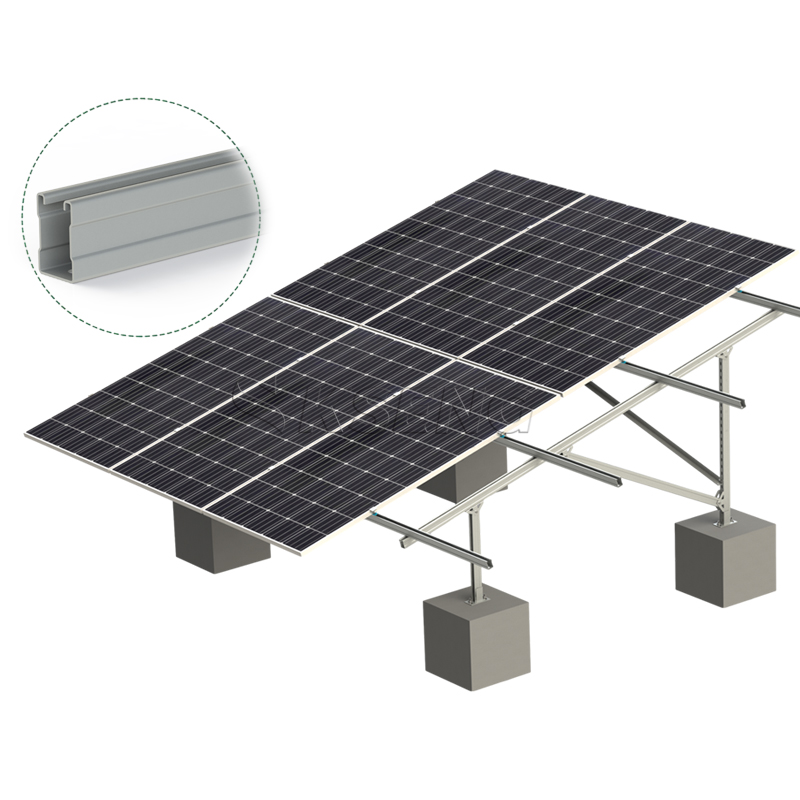
Choosing the correct framework determines the physical longevity of your array. You must evaluate wind loads, snow accumulation, and seasonal sun trajectories. A robust Solar Ground Mounting System prevents catastrophic failures during severe weather. Let us explore the primary frame configurations.
Fixed-tilt systems represent the industry standard. Engineers design these structures for straightforward, set-and-forget installations. The installer secures the array at a permanent, optimal angle. They calculate this angle based on your specific latitude. These systems are highly cost-effective. They utilize standard engineering frameworks. These rigid structures withstand baseline wind and snow loads effortlessly. You sacrifice a small amount of seasonal efficiency for extreme mechanical reliability.
Sun angles change drastically between summer and winter. An Adjustable Ground Mount Rack allows manual tilt changes throughout the year. You typically adjust the angle two to four times annually. You tilt it steeper in winter to catch low sunlight. You flatten it in summer for high midday sun. This tracking capability increases overall annual energy yield by 5 to 15 percent. However, it requires active owner participation. You must physically adjust the heavy frames. It also incurs slightly higher upfront hardware costs due to movable joints.
Your local climate should dictate your frame material. You typically choose between carbon steel and aluminum alloys.
Commercial Durability: A Carbon Steel Ground Mount Rack provides unmatched commercial-grade durability. You need steel for heavy snow load zones. High wind-shear environments also demand steel rigidity. You must ensure the steel undergoes hot-dip galvanization. This chemical process prevents aggressive rust and corrosion.
Corrosion Resistance: Aluminum alloys offer different benefits. They are much lighter. This reduces shipping and handling costs. Aluminum is highly corrosion-resistant naturally. It serves as the ideal choice for coastal areas. Salty sea air destroys unprotected steel quickly. However, aluminum remains less rigid under extreme mechanical stress than thick steel.
| Frame Type / Material | Best Use Case | Maintenance Requirement | Relative Upfront Cost |
|---|---|---|---|
| Fixed-Tilt Framework | Standard residential and utility applications | Very Low (Set and forget) | Low |
| Adjustable Racking | High-yield goals, varied seasonal sun | Medium (Manual adjustments required) | Moderate |
| Carbon Steel (Galvanized) | High wind areas, heavy snow zones | Low (Inspect galvanization periodically) | Moderate to High |
| Aluminum Alloy | Coastal environments, highly corrosive air | Low (Naturally rust-resistant) | Moderate |
Above-ground hardware only functions well on a solid base. You cannot simply place a large sail-like structure on dirt. Geotechnical factors dictate your entire engineering approach. You must conduct a thorough site assessment before buying equipment.
Soil composition drives your foundation choice. A geotechnical engineer evaluates your land carefully. They look for specific soil traits. Sandy soils lack cohesion. Clay soils expand and contract wildly. Bedrock prevents deep digging. High water tables cause frost heave in winter. You must match your foundation technology to these underground realities. Ignoring soil composition leads to shifting arrays and shattered panels.
Modern installers frequently prefer earth screws. A Solar Ground Screw offers the fastest installation method available. Heavy machinery drives these large, galvanized metal screws deep into the earth. This method minimizes soil displacement. You completely eliminate concrete curing times. It proves ideal for cohesive soils. Environmentally sensitive sites benefit greatly from this approach. It leaves a minimal ecological footprint. Furthermore, it offers easy removal. If you ever decommission the array, you simply unscrew the foundations and restore the land.
Utility-scale projects usually require driven piles. Installers use hydraulic pile drivers for this method. They hammer heavy steel beams directly into the ground. It requires no excavation. It serves as the standard for massive solar farms and heavy residential mounts. However, driven piles demand clear site access. You must maneuver large, heavy machinery onto your property. It also creates significant noise during installation. Rocky soils can damage the piles during the driving process.
Sometimes, penetrating the earth is impossible or illegal. Concrete ballasts solve this problem. Installers place heavy concrete blocks directly on the surface. They bolt the racking system to these blocks. You need ballasts for sites featuring shallow bedrock. Landfill caps also require ballasts. Environmental regulations prohibit deep soil penetration on capped landfills. Alternatively, highly corrosive soils might eat through metal piles. In such cases, installers pour traditional concrete footings. Poured footings require extensive excavation and long curing times.
Many property owners underestimate the site-preparation phase. A ground array resembles a minor civil engineering project. You must uncover hidden expenses early. Unplanned civil costs can derail your financial projections quickly.
Underground wiring represents the largest hidden variable. You must connect the solar array to your main electrical panel. Distance dictates this cost directly. Long distances require thicker copper wire gauge sizing. You must upsize the wire to prevent dangerous voltage drops. Thick copper wire is incredibly expensive. Additionally, you must pay for excavation labor. Digging a three-foot-deep trench across a property requires time and heavy equipment. Striking hidden rocks or tree roots increases labor costs immediately.
Local municipalities view solar structures differently. Most town planners classify ground systems as permanent accessory structures. They treat them like detached garages or large sheds. You will face common compliance hurdles. Property line setbacks are strictly enforced. You cannot build too close to your neighbor. Height restrictions often apply to the top edge of the tilted array. Local aesthetic ordinances pose another challenge. Homeowner Associations (HOAs) frequently demand visual buffering. They might force you to plant expensive evergreen trees to hide the panels.
You rarely find a perfectly flat, clear piece of land. Environmental preparation eats into budgets quickly. You might need extensive tree removal to prevent winter shading. Removing large trees involves stump grinding and debris hauling. Uneven terrain requires heavy grading. You need relatively flat ground to ensure the racking system aligns correctly. Furthermore, you must plan for ongoing vegetation management. Weeds and tall grass will grow around your ground-level wiring. You need a safe weed control strategy. String trimmers can easily slice through exposed solar conduits if you are careless.
Ground arrays require distinct skill sets. A contractor specializing only in rooftops might struggle with soil mechanics. You must vet potential partners rigorously. Protect your investment by asking the right technical questions.
Never accept a generic proposal. Demand specific site evaluations. Require your contractors to provide a formal shading analysis. They must use specialized software to map winter sun paths across your specific terrain. Additionally, demand a preliminary soil assessment. They should evaluate soil bearing capacity before finalizing your pricing. Quotes based purely on satellite images often hide expensive change-orders later.
Insist on complete equipment transparency. You need to know the exact racking manufacturer. Request the spec sheets for the proposed foundation methodology. Match this hardware to your local weather data. If you live in a hurricane zone, verify the exact wind-speed rating of the steel frame. Do not accept vague descriptions like "premium racking materials." You need exact brand names and engineering certifications.
Read the fine print regarding civil works. Many solar contracts exclude dirt work. Ensure the quote explicitly covers all trenching. It must specify the conduit burial depth. It should also include post-installation landscape grading. Installers often leave massive dirt piles after trenching. Your contract must state who handles the final soil leveling and reseeding. Pinning down these responsibilities prevents bitter disputes later.
Warranties vary significantly between ground and roof applications. You must verify coverage carefully. Panel manufacturers sometimes alter performance guarantees based on mounting methods. Racking hardware warranties must cover ground-based soil corrosion explicitly. Ensure the installer provides a comprehensive workmanship warranty. This should cover the structural integrity of the foundations against frost heave or soil settling. Get all warranty alignments confirmed in writing before signing.
Ground-mounted installations offer unparalleled energy generation potential. They remove the severe limitations imposed by complex, aging rooftops. You gain absolute control over orientation, tilt, and temperature management. While they require more upfront site preparation, their superior production efficiency routinely justifies the investment. They provide accessible, safe, and highly optimized power generation for properties holding adequate space.
Your success depends entirely on proper planning. You must evaluate frame materials, test soil conditions, and budget for trenching accurately. Take action by consulting a certified local solar engineer. Request a comprehensive geotechnical site survey first. Then, ask for a comparative return-on-investment model weighing a roof system against a ground setup. Armed with real data, you can build a resilient energy asset perfectly tailored to your land.
A: Yes, they typically run 10-20% higher upfront. This increase comes from necessary foundation engineering, deep trenching, and specialized racking hardware. However, they frequently offset these initial costs over time by producing a higher overall energy yield due to optimal orientation and cooler operating temperatures.
A: A typical residential 10kW system requires roughly 400–600 square feet of dedicated space. This land must be unshaded by trees or buildings and relatively flat. You must also account for local setback rules, which require buffer zones between the panels and your property lines.
A: While the routine seasonal angle adjustments are very DIY-friendly, the initial installation is not. The heavy racking assembly, precise foundation engineering, and high-voltage underground wiring require licensed professionals. Professional installation ensures you maintain strict safety compliance and preserve your equipment warranties.
A: If your soil prevents ground screw penetration, installers will pivot their strategy. They typically switch to above-ground heavy concrete ballasts or pre-drilled micro-pile foundations. These alternative methods ensure stability but will likely impact your original project timelines and increase overall budget requirements.





