Views: 0 Author: Site Editor Publish Time: 2026-06-02 Origin: Site


For utility-scale and commercial developers, fixed-tilt arrays leave significant energy—and revenue—on the table. You invest heavily in tier-one modules. Yet, traditional tracking mechanisms struggle immensely under unpredictable weather and sudden cloud cover. These outdated setups cost you valuable power generation daily. Standard Solar Position Algorithms (SPA) and basic light-dependent resistors (LDRs) fail to optimize for diffuse irradiance. This technical blind spot results in heavily sub-optimal yields during overcast conditions. You lose critical harvest hours whenever skies turn grey.
Integrating AI and machine learning into a modern tracking network bridges this gap effectively. Artificial intelligence dynamically adjusts your equipment to real-time environmental data. You can push yield gains up to 25% while comprehensively protecting hardware during extreme weather. We will explore how smart algorithms transition solar infrastructure from static assets to highly responsive energy plants. You will learn the exact mechanisms driving these impressive yield improvements.
Yield Optimization: AI-driven models excel in sub-optimal weather, capturing up to 7.8% more energy during cloudy conditions compared to standard astronomical tracking by prioritizing diffuse irradiance.
Weather Resilience: Modern trackers combine software intelligence with robust hardware, enabling rapid emergency stowing (under 8 minutes) to survive extreme wind events (up to 60m/s).
Financial Viability: While requiring 15–30% higher initial CAPEX and 25–40% more land space, AI-optimized tracking accelerates ROI, reducing the payback period by approximately 0.39 years compared to fixed systems.
Future-Proofing: Multi-sensor fusion, smart backtracking, and wireless LoRaWAN communications reduce O&M costs and mechanical wear.
Legacy systems suffer from rigid operational limits. Standard SPA relies purely on geometric calculations to map the sun path. It assumes a perfectly clear sky every single day. This rigid math ignores actual weather realities. Basic LDR sensors track the brightest point in the sky. They frequently suffer from severe calibration drift. Localized shading failures plague these basic setups. Dirt, dust, or bird droppings easily confuse optical sensors. They point arrays in entirely wrong directions.
Artificial intelligence completely flips this reactive dynamic. Neural networks process complex environmental variables instantly. Machine learning models analyze past performance, current weather, and incoming forecasts. Random Forest algorithms evaluate hundreds of data points simultaneously. They determine the absolute best angle for power generation at any given second. They ignore localized sensor anomalies seamlessly.
The solar industry now heavily favors multi-sensor fusion. Predictive positioning models perform much better than reactive ones. An intelligent solar tracker merges diverse data streams continuously. This architecture eliminates single points of failure.
Photodiode Data: Captures precise light intensity across multiple spectrums continuously.
GPS Positioning: Ensures base astronomical alignment regardless of severe local weather.
Cloud-Detection Cameras: Maps sky coverage to predict incoming shading events accurately.
Terrain Mapping: Accounts for unique site topography and complex ground slopes.
Smart algorithms optimize heavily for diffuse irradiance. AI adjusts panel angles differently during overcast days. It stops pointing arrays directly at a covered sun. Instead, the system levels the modules horizontally. This flat orientation captures multi-directional scattered light effectively. Maximizing sky sector diffuse irradiance recovers energy usually lost to clouds. This specific tactic drives significant production increases in winter months.
Smart backtracking execution solves another major operational challenge. Early mornings and late afternoons introduce very long shadows. Row-to-row shading cripples energy output rapidly across an array. AI accurately calculates your Ground Coverage Ratio (GCR). It analyzes uneven terrain slopes in real-time. The system dynamically adjusts individual row angles to prevent shadows. This intelligent maneuvering minimizes power loss significantly during peak pricing hours.
We also see massive gains through bifacial synergy. Pairing a solar panel tracking system alongside bifacial modules unlocks massive potential. The AI calculates optimal ground albedo continuously. It chases reflectivity variations throughout the entire day. Dry soil, morning snow, and wet grass all reflect light differently. The algorithm adjusts the pitch to maximize backside absorption. This synergy significantly compounds overall energy yield across the site.
Flattens panel pitch automatically during heavy cloud cover.
Eliminates morning and evening shadow overlap completely.
Adapts instantly to shifting seasonal ground reflectivity.
Balances front-side direct light and back-side albedo flawlessly.
EPCs and developers constantly worry about mechanical risk. Moving parts inherently face mechanical failure and violent storm damage. Harsh climates destroy fragile equipment quickly. Insurance premiums rise when structural integrity remains questionable. You need absolute confidence in operational stability.
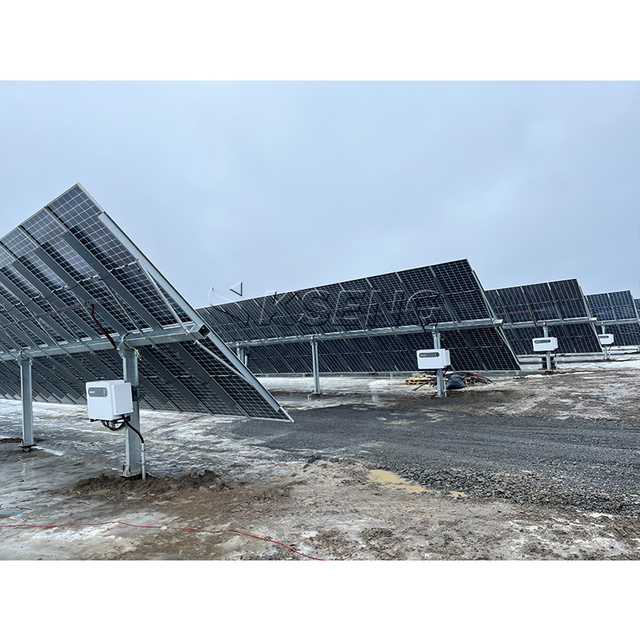
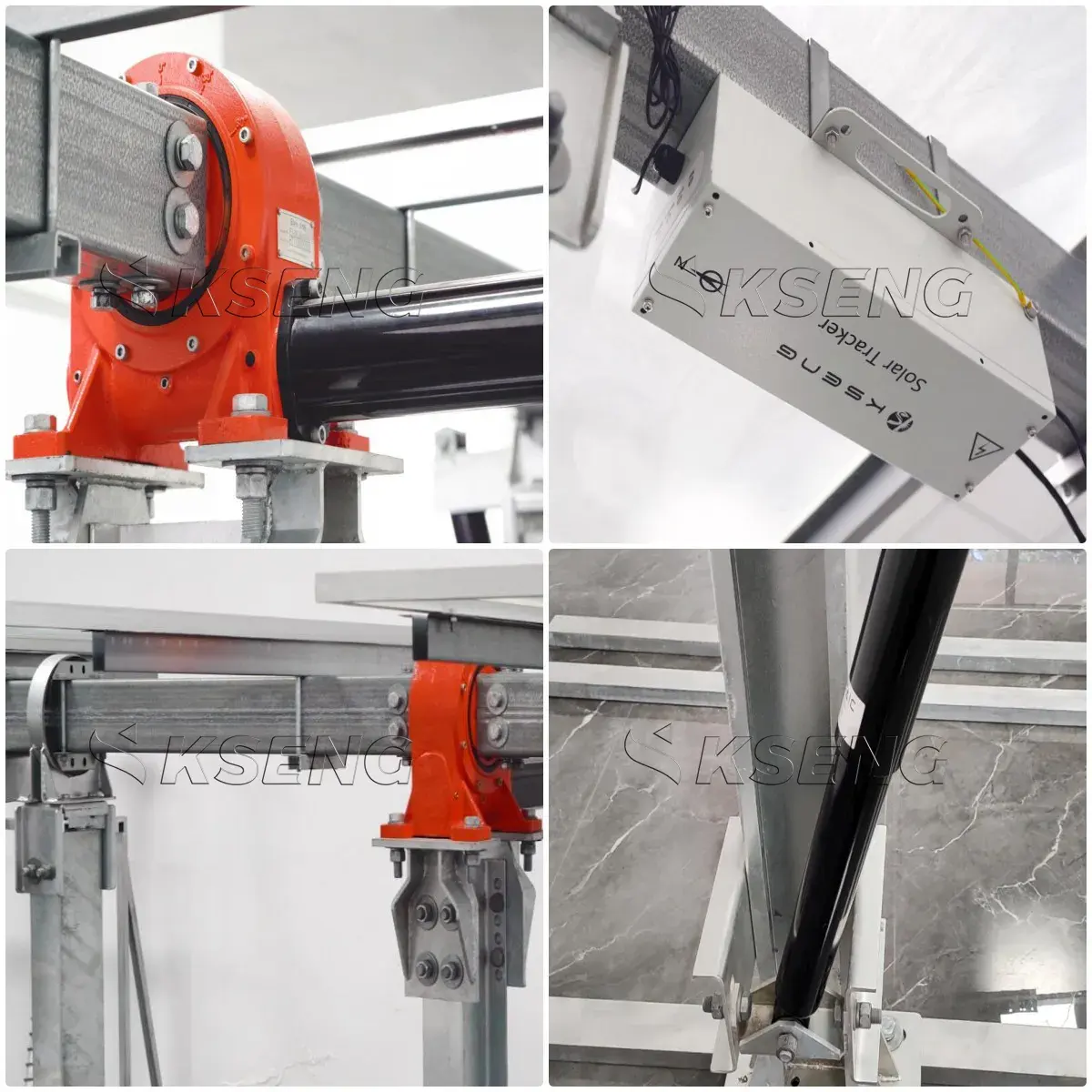
Modern wind and hail defense relies on robust structural thresholds. Enterprise-grade setups feature rugged multi-point drives. These mechanisms prevent torque deformation during severe turbulence. AI monitors site anemometers to trigger predictive, automated stowing. The system shifts panels into a protective flat or steep angled position immediately. It executes this defensive move ahead of 60m/s gusts or sudden hail. Survival requires rapid response times under eight minutes.
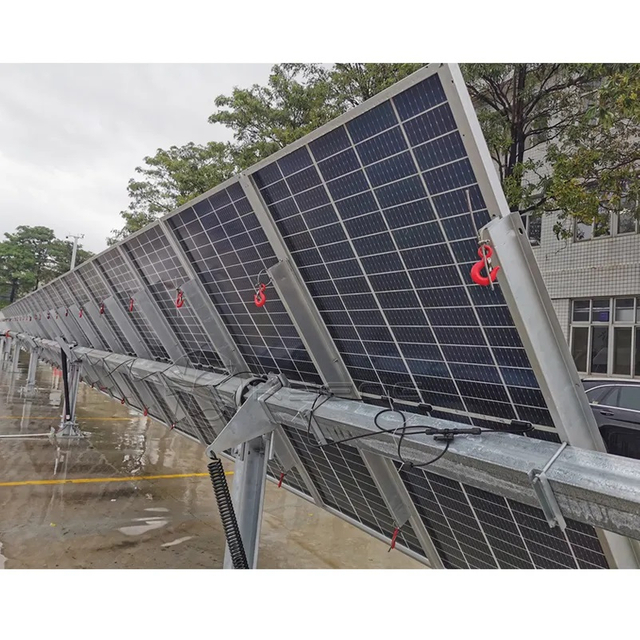
Redundancy dictates long-term commercial success. Reliable operation depends heavily on self-powered motor mechanisms. A dedicated mini-panel powers the drive directly. Wireless control communication eliminates severe underground cable degradation. Protocols like LoRaWAN ensure stable commands across massive distances. Edge-AI controllers guarantee function if cloud connectivity drops. Your asset protects itself even during total grid failure.
Common Mistake: Relying solely on central grid power for emergency stow motors leaves sites vulnerable during blackouts.
Best Practice: Install localized backup batteries or self-powered string controllers to guarantee defensive movements under any condition.
Upfront realities demand transparent cost assessment. Implementing a single axis solar tracker increases initial CAPEX by 15–30%. Dual-axis systems push this premium even higher. Moving structures also require 25–40% more land footprint. You must space rows further apart to prevent self-shading. Land acquisition costs play a major role in project feasibility.
The yield versus cost equation justifies this investment clearly. A modern one axis solar tracking system delivers a 15–25% yield boost. Dual-axis setups can push gains beyond 30% in optimal locations. The revenue generated by this extra power offsets the structural costs quickly. Higher production volume directly accelerates your return on investment.
We can model this financial impact directly on Levelized Cost of Energy (LCOE). Higher baseline yields lower the per-kilowatt production cost dramatically. Predictive diagnostics reduce manual maintenance trips. Technicians only dispatch when the software flags an anomaly. This operational efficiency shortens the payback period significantly. The reduction averages approximately 0.39 years compared to fixed systems. Lower LCOE translates to vastly superior project margins.
| System Configuration | Initial CAPEX Increase | Land Footprint Needs | Average Yield Boost |
|---|---|---|---|
| Fixed-Tilt Array | Baseline (0%) | Baseline | Baseline |
| Single-Axis Tracker (AI) | +15% to +30% | +25% to +40% | +15% to +25% |
| Dual-Axis Tracker (AI) | +25% to +40% | +35% to +45% | +30% or more |
Site-specific feasibility dictates your final hardware choices. You must evaluate criteria based on latitude carefully. Trackers prove highly effective near the equator and at high latitudes. Terrain undulation matters immensely during site planning. Steep or rolling hills require independent row controls. Available acreage determines if you can achieve the optimal GCR successfully.
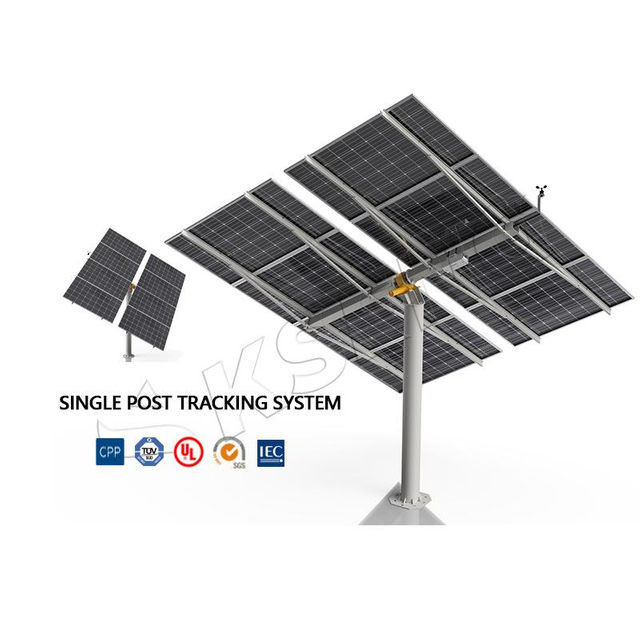
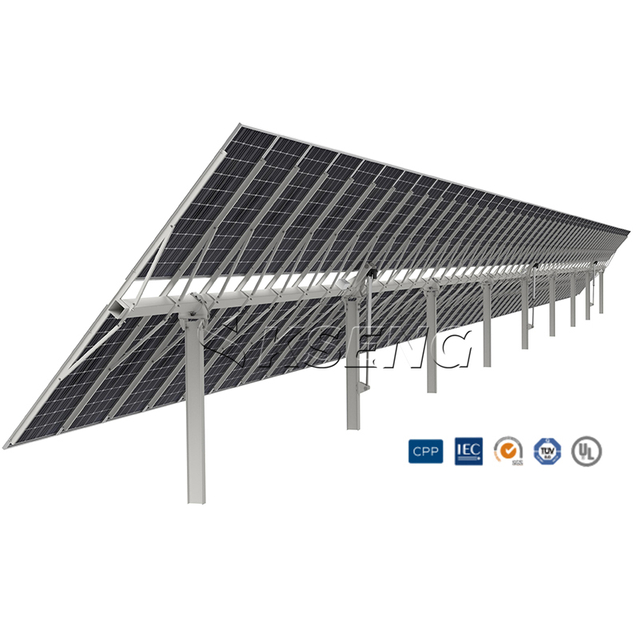
You must choose between single-axis and dual-axis architectures early in the design phase.
| Evaluation Criteria | Single-Axis Systems | Dual-Axis Systems |
|---|---|---|
| Primary Movement | East to West (Daily adjustment) | East/West + North/South |
| Mechanical Reliability | Extremely High (Fewer parts) | Moderate (Complex gearing) |
| Ideal Application | Utility-Scale / Large Commercial | Niche / Space-constrained plots |
Vendor selection criteria safeguard your long-term commercial investment. Integrating a high-quality solar tracker system requires rigorous technical vetting. Buyers must evaluate independent wind-tunnel testing documentation. Certifications from renowned institutions like TÜV SÜD validate structural endurance claims. Software compatibility poses another critical integration hurdle. The tracking algorithms must sync smoothly into your existing energy management platforms. Finally, inspect the predictive maintenance dashboard. Clear anomaly detection prevents minor mechanical faults from becoming catastrophic failures.
AI-driven tracking completely transforms modern solar arrays. It evolves them from static assets into highly responsive, yield-maximizing power plants. These intelligent setups excel specifically where legacy mechanisms fail consistently. They conquer overcast conditions and adapt seamlessly to complex site terrain. Their predictive abilities ensure maximum harvest during optimal conditions.
Project developers must take proactive analytical steps. Model your specific site parameters thoroughly today. Run your localized weather data against an AI tracking software simulation. Do this before finalizing any major EPC contracts. This simulation validates your projected GCR and confirms your expected yield gains accurately. Ensure your engineering teams prioritize software intelligence as highly as they value structural steel.
A: Tracking configurations typically require 25–40% more space. This extra footprint accommodates the required Ground Coverage Ratio (GCR). Spacing rows further apart prevents shadows from one moving row falling onto the next during early mornings and late afternoons.
A: Moving parts inherently demand more maintenance than fixed brackets. However, modern AI units use predictive algorithms to monitor health continually. They flag sensor drift or motor wear long before mechanical failure occurs. This intelligence drastically reduces unexpected truck rolls and manual field inspections.
A: Modern smart mechanisms utilize localized edge-control features. They operate via self-powered string batteries or direct panel power. This autonomy allows them to execute emergency wind-stow commands instantly. They protect themselves entirely independently of the main grid or cloud server connectivity.