Views: 0 Author: Site Editor Publish Time: 2026-06-05 Origin: Site


Fixed-tilt arrays provide predictable generation baselines for utility-scale solar deployments globally. However, achieving absolute maximum yields requires developers to move beyond these static angles. The transition toward active tracking technology is now practically mandatory to optimize your project's Levelized Cost of Energy (LCOE). Introducing moving hardware naturally brings new mechanical, environmental, and financial variables into the initial project scope. EPCs and project developers must navigate these complex variables carefully to prevent catastrophic site failures during extreme weather events.
This guide delivers a rigorous, vendor-neutral framework for utility-scale procurement teams. You will learn exactly how to assess a solar energy tracker by evaluating terrain adaptability and weather resilience. We also detail critical compliance standards and financial strategies required for long-term project bankability. You can use these insights to structure better contracts and secure more reliable hardware.
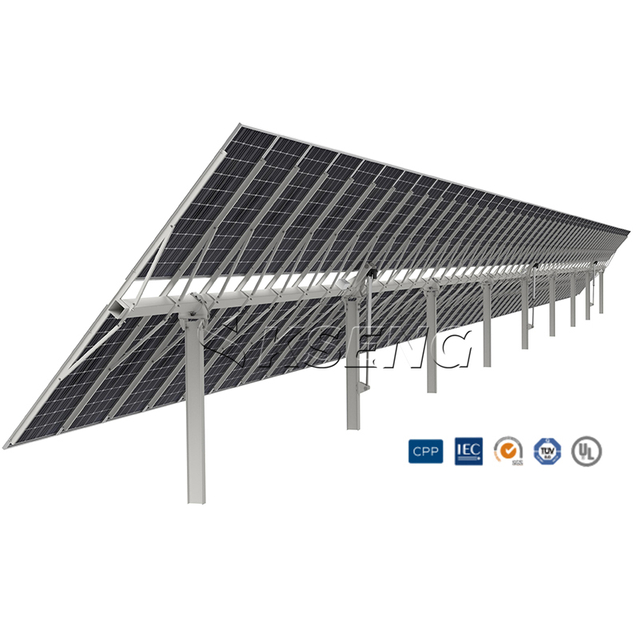
Primary Architecture: The single axis solar tracker remains the utility-scale standard, balancing a 15–35% yield increase with manageable O&M costs compared to dual-axis systems.
Risk Mitigation: Modern tracker procurement hinges on weather resilience (e.g., steep-angle hail stow) and strict adherence to global safety standards (IEC 62817 / UL 3703).
Site-Specific Economics: Advanced trackers reduce civil engineering costs by accommodating complex land undulations (up to 26% grade changes), offsetting higher initial CapEx.
Financial Viability: Bankability relies on proven system availability (>99.9%) and alignment with peak grid demand periods to maximize power purchase agreement (PPA) revenues.
Utility-scale solar developers face intense pressure to maximize energy yields. Fixed-tilt modules capture peak sunlight for only a brief midday window. A dynamic solar tracker system constantly follows the sun's trajectory. This continuous movement yields between 15% and 35% more energy annually. You generate significantly more power during the early morning and late afternoon hours. This extended generation profile fundamentally changes project economics.
Peak demand matching represents a crucial advantage for modern trackers. Summer cooling loads typically spike late in the afternoon. Fixed arrays lose critical efficiency precisely as the sun lowers in the sky. Active tracking hardware maintains direct solar exposure during these high-demand hours. You align your energy production directly with the grid's most stressed periods. This alignment helps you secure higher Time-of-Use (TOU) pricing. It ultimately boosts your Power Purchase Agreement (PPA) revenues significantly.
Project bankability depends heavily on realistic ROI calculations. Upfront tracking costs are undeniably higher than fixed structures. Industry baselines suggest a $0.15 to $0.25 per watt premium for utility-scale deployments. However, the lifetime absolute returns easily justify this initial investment. Fixed systems typically reach payback in roughly 13 years. Trackers take about 15.5 years due to higher capital costs. You essentially trade a slightly longer payback timeline for massive long-term revenue gains. Developers must acknowledge this trade-off openly. You gain increased baseline revenue, but you must budget diligently for active mechanical operations and maintenance.
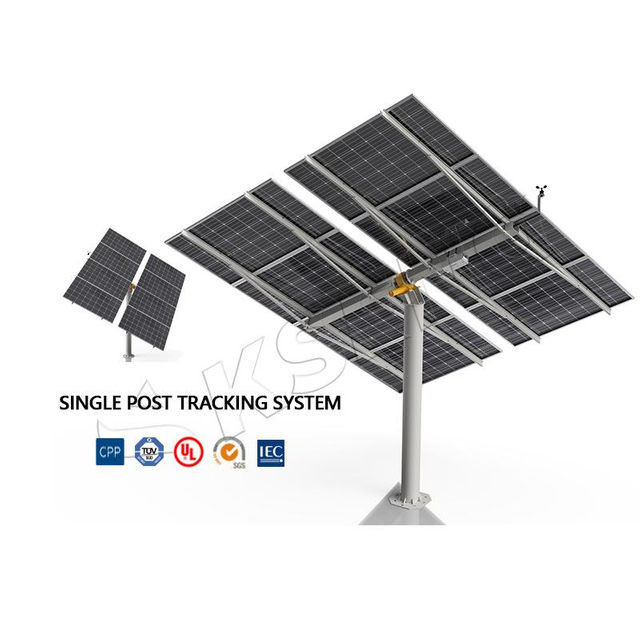
The solar market heavily favors the single axis solar tracker for large-scale utility farms. This architecture perfectly balances initial capital expenditure against high energy yield. Dual-axis systems track the sun both horizontally and vertically. They capture the maximum possible light but cost significantly more to install. They also require highly intensive mechanical maintenance. You generally reserve dual-axis units for highly space-constrained environments or specialized niche applications. Utility deployments rely on the proven efficiency of single-axis models to optimize the CAPEX-to-yield ratio.
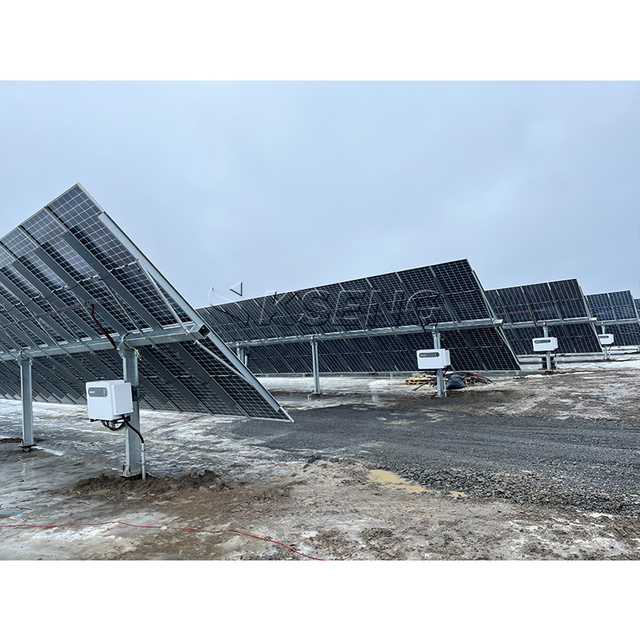
Land is rarely perfectly flat at a massive utility scale. Grading uneven terrain costs developers millions of dollars. You face heavy earthmoving expenses and lengthy permitting delays. Modern adaptive trackers solve this persistent problem beautifully. They utilize independent row architectures rather than rigidly linked systems. Articulated structural joints and variable post heights absorb natural land undulations effortlessly. These systems easily handle variable slopes and grade changes up to 26 percent. You can eliminate massive land grading costs almost entirely.
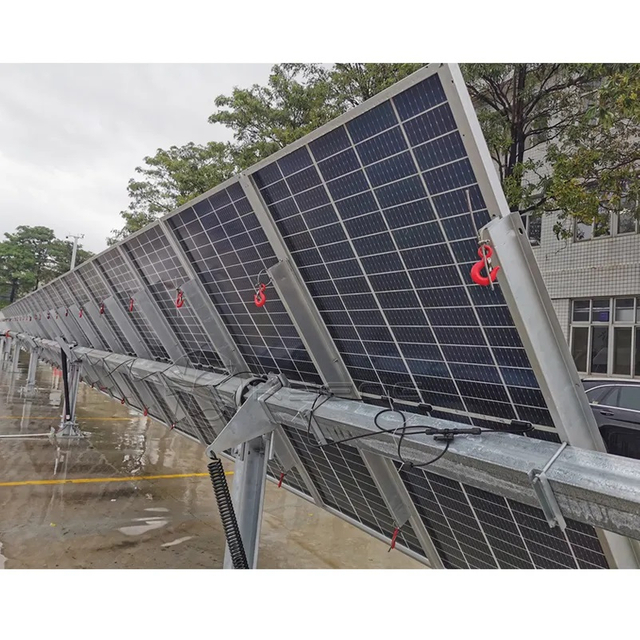
Solar modules grow larger and heavier every single year. Developers routinely deploy ultra-large-format PV modules exceeding 600W. Your tracker infrastructure must accommodate these massive surface areas safely. Structural hardware requires exceptionally high torque limits to prevent twisting. The purlins and torque tubes must manage heavy weight loads without bowing. Future-proofing your deployment ensures long-term site viability. You must verify hardware tolerances before signing any procurement contracts.
| Technical Feature | Single-Axis Tracker | Dual-Axis Tracker | Fixed-Tilt System |
|---|---|---|---|
| Energy Yield Boost | 15% – 35% increase | 35% – 45% increase | Baseline (0%) |
| O&M Complexity | Moderate | Very High | Very Low |
| Terrain Adaptability | Excellent (Up to 26% grade) | Moderate | Good |
| Primary Application | Utility-scale solar farms | Space-constrained niche sites | Low CapEx basic projects |
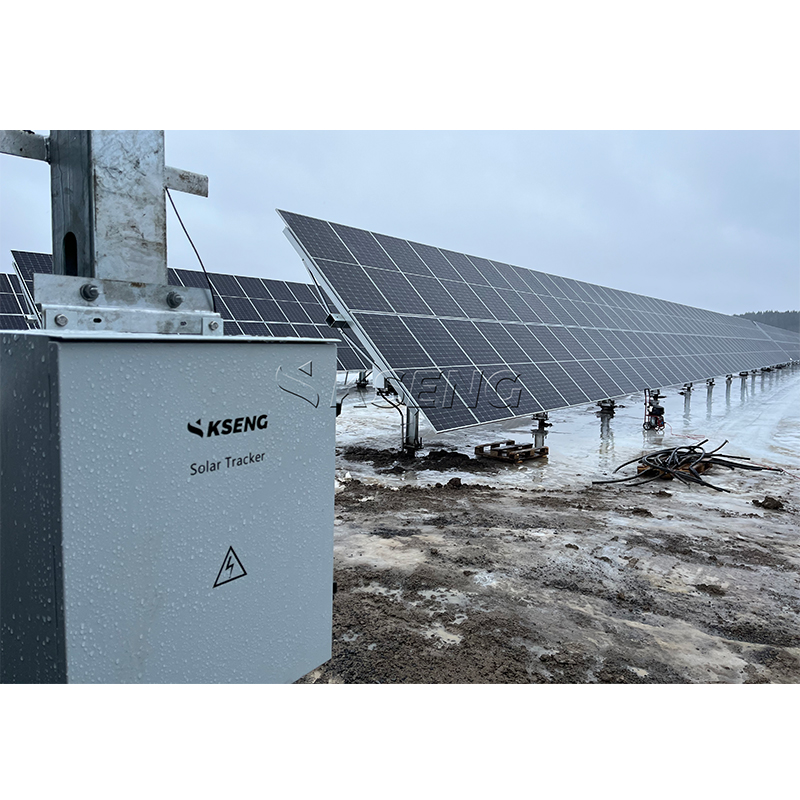
Climate change brings increasingly severe weather events worldwide. You must protect massive infrastructural investments from unpredictable elements. Modern hardware relies on both active and passive extreme weather stow strategies. Hail storms can destroy static arrays in minutes. Smart trackers utilize a rapid-response 75-degree stow angle during hail events. This steep vertical angle drastically minimizes direct hail impact energy. High winds require entirely different defense mechanisms. Intelligent systems often mandate a zero-stow or purely horizontal position. This flat aerodynamic profile prevents catastrophic wind uplift and structural torsion.
Industry certifications establish fundamental trust and operational bankability. You must demand strict adherence to global safety protocols during procurement. Do not purchase equipment lacking recognized testing labels. Several must-have specifications define a safe, reliable solar tracker deployment:
IEC 62817: This critical standard dictates the comprehensive design qualification for solar trackers. It verifies structural integrity and tracking accuracy over time.
UL 3703: This serves as the primary electrical and mechanical safety standard specifically for tracking equipment. It prevents catastrophic motor and controller fires.
UL 2703: This certification governs the general mounting systems and clamping hardware. It ensures your ultra-large panels will not rip off the purlins.
Continuous operation requires exceptional hardware reliability. A tracker operates relentlessly through extreme temperature fluctuations for decades. Sudden component failure stalls energy production and impacts revenue. You must evaluate the raw durability of all drive mechanisms. High-end systems utilize shape-memory alloys and advanced self-lubricating polymer bearings. These premium parts prevent single-point failures across multiple project phases. They reduce manual greasing requirements and guarantee maximum system uptime.
| Weather Event | Tracker Defense Strategy | Primary Benefit |
|---|---|---|
| High Wind | Horizontal Stow (Zero-Degree) | Reduces aerodynamic drag and prevents uplift. |
| Heavy Hail | Steep Angle Stow (75-Degree) | Deflects kinetic impact energy from panel glass. |
| Heavy Snow | Steep Angle Stow (Shedding Mode) | Forces snow to slide off, reducing weight loads. |
Procurement teams must evaluate beyond initial basic equipment costs. You should analyze the full Levelized Cost of Energy (LCOE). Utility projects run for a 25 to 30 year operating phase. Initial capital savings often create massive long-term maintenance burdens. High-quality trackers reduce long-term operating expenses (OpEx) significantly. They integrate predictive maintenance sensors and remote software troubleshooting. You quickly offset higher capital expenditures (CapEx) through sustained high-efficiency energy yields.
High-tolerance trackers adapt seamlessly to existing natural landscapes. This terrain flexibility drastically reduces heavy machinery grading requirements. You avoid moving thousands of cubic yards of native soil. This adaptive approach lowers your overall structural steel usage too. Variable pile heights and articulated joints save massive material costs. You ultimately protect the local ecosystem while saving millions in civil construction fees.
Procurement decisions directly shape your financial modeling outcomes. Many regional markets offer highly lucrative policy incentives for renewable energy. The US Inflation Reduction Act (IRA) provides a perfect example of these benefits. Satisfying domestic content requirements under IRA Section 45X unlocks significant bonus tax credits. Sourcing locally manufactured steel tubes and controllers makes financial sense. You can transform a standard site into a highly profitable, optimized asset. We strongly recommend aligning your supply chain with local tax policies.
Mechanical hardware requires intelligent software to operate securely. Assess the vendor's digital ecosystem carefully during your evaluation phase. Modern platforms integrate advanced AI-driven weather prediction tools directly into the control software. They position panels securely long before violent storms hit the site. Digital twin technology simulates site conditions virtually in real time. It predicts mechanical component wear before physical failures occur. A reliable solar panel tracking system needs this seamless digital oversight to remain profitable.
Evaluate the manufacturer's global supply chain footprint extensively. Replacement parts must arrive quickly when inevitable breakages happen. Examine their approach to modular maintenance carefully. You should ask if individual rows or motors can be serviced independently. Technicians should repair localized faults without shutting down the entire block. This modularity keeps your overall site production high during routine servicing.
Warranties provide the ultimate safety net for your infrastructure investment. You must define clear, acceptable performance thresholds before purchasing. Strong warranties indicate a manufacturer's confidence in their own engineering. Look for these baseline guarantee structures:
A comprehensive structural warranty lasting a minimum of 10 to 15 years, covering steel fatigue and corrosion.
A mechanical parts warranty spanning 5 to 10 years, covering actuators, drive motors, and dampers.
A control system warranty lasting 5 years, covering intelligent tracking controllers and communication nodes.
Selecting tracking hardware is not just a standard component purchase. It establishes a long-term infrastructure partnership that lasts decades. Your choice dictates your facility's resilience against severe weather and its ability to maximize grid revenue. Developers must balance upfront capital costs against the undeniable long-term yield improvements. Choosing intelligent, terrain-adaptive architecture sets the foundation for project bankability.
Procurement teams must adopt a rigorous, evidence-based approach moving forward. We recommend taking the following concrete steps when issuing requests for proposals:
Demand site-specific energy yield simulations based on localized weather data.
Request comprehensive third-party independent engineering (IE) reports to verify structural claims.
Establish clear O&M service level agreements (SLAs) regarding software updates and spare parts delivery.
Verify all UL and IEC safety certifications directly with the testing laboratories.
By enforcing these strict evaluation criteria, developers can confidently deploy active tracking systems. You will optimize energy production, secure higher revenues, and build resilient utility-scale assets for the future.
A: The core structural components of a utility-scale tracker easily last 25 to 30 years. This lifespan matches the solar panels perfectly. However, you must plan for shorter replacement cycles regarding electronic components. Actuators, drive motors, and tracking controllers typically require replacement every 5 to 10 years. Budgeting for these predictable maintenance cycles ensures uninterrupted energy production over the project's lifetime.
A: Modern trackers utilize independent row architectures. They feature articulated joints and variable pile heights. These mechanisms allow the torque tube to follow natural land contours smoothly. You can accommodate grade changes up to 26 percent. This adaptability eliminates the need for expensive earthmoving and massive site grading before installation.
A: Active hardware requires routine mechanical upkeep. Maintenance crews must perform regular motor lubrication and gear inspections. Sensor calibration remains crucial for accurate sun tracking. Software updates keep the control algorithms optimized for changing weather patterns. Predictive maintenance platforms now automate many of these objective O&M realities, significantly reducing manual labor hours.
A: Yes, tracking hardware works exceptionally well in agrivoltaics. Engineers install the panels on higher piles to allow tractors underneath. You can adjust the tracker algorithms easily. This flexibility optimizes ground shading to protect sensitive crops during peak heat. It maximizes power output while simultaneously improving local agricultural yields.