Views: 0 Author: Site Editor Publish Time: 2026-06-06 Origin: Site


Extreme weather poses a critical vulnerability to utility-scale photovoltaic plants worldwide. While solar module efficiency often captures the industry spotlight, long-term financial viability depends entirely on the mechanical resilience of the tracking mechanism. At the core of this resilience sits the slew drive. We recognize it as the central mechanical heart of a modern single axis solar tracker, bearing the heaviest dynamic wind loads while maintaining critical structural integrity.
When wind speeds escalate, the sheer kinetic energy transferred to this central hub can be devastating. Therefore, evaluating a solar tracker requires looking far beyond standard tracking software algorithms. Project engineers must heavily scrutinize the slew drive’s holding torque, gear design, and environmental sealing. Focusing on these robust mechanical safeguards is the most reliable way to prevent catastrophic structural failure and minimize operational setbacks over a 25-year lifespan.
A slew drive’s holding torque capacity is the definitive metric for preventing torsional flutter and catastrophic failure during extreme wind events.
Enclosed, self-locking worm gear mechanisms offer superior fail-safe capabilities in a one axis solar tracking system compared to exposed or non-locking alternatives.
Procurement evaluation must require independent, accelerated lifecycle testing data, specifically focusing on abrasive ingress (IP ratings) and thermal degradation.
Upfront cost savings on drive components frequently result in disproportionate long-term losses due to micro-stoppages and increased maintenance cycles.
Wind does not simply push statically against large-format photovoltaic modules. It creates complex, highly dynamic aerodynamic phenomena. As wind moves across the face of a solar panel array, it generates turbulence. Vortices begin to shed along the module edges. This shedding induces severe, rhythmic vibrations. Engineers refer to these forces as aerodynamic instability, galloping, and torsional flutter. These phenomena transform large PV modules into massive airfoils. The resulting kinetic energy travels straight down the mounting torque tube. It ultimately transfers directly into the central drive system.
In this dynamic environment, the slew drive acts as the primary anchor point. During normal sunny conditions, it functions merely as a slow-moving positioning device. However, when storm clouds gather, the system alters its function. The tracker actively moves into a defensive "stow" position to minimize wind resistance. Once it reaches this flat or slightly angled stow angle, the slew drive stops rotating. It immediately transitions into a critical structural brake. It must hold massive torque loads completely static while the wind attempts to rip the modules upward or twist them backward.
If the drive mechanism lacks the mechanical strength to resist these forces, the results are swift and disastrous. The cascading effects of drive failure extend far beyond replacing a single gearbox. Asset owners typically face severe consequences:
Stripped internal gear teeth rendering the entire tracker row uncontrollable in high winds.
Catastrophic panel collisions destroying neighboring modules and torque tubes.
Voided manufacturer warranties due to mechanical yielding beyond specified operational limits.
Massive energy yield losses while awaiting heavy replacement equipment and specialized repair crews.
Engineers design tracking systems using various mechanical solutions. The industry primarily compares enclosed rotational slew drives against linear actuators and wire-rope systems. Each category approaches movement differently. Linear actuators use pushing and pulling screw mechanisms. Wire-rope systems rely on tensioned cables and pulleys. Slew drives rely on enclosed rotational gears meshing in a continuous circle.
Slew drives offer distinct mechanical advantages over their alternatives. They provide continuous rotational capability. More importantly, they feature a distributed load-bearing surface area. A linear actuator concentrates wind forces onto a single mounting pin and an extended steel rod. This extension makes it highly vulnerable to bending or buckling under lateral wind shear. Slew drives distribute these sheer forces across heavy-duty housing bolts and multiple engaged gear teeth simultaneously.
This distributed load forms the basis for a superior fail-safe architecture. Specific slew drive designs utilize hourglass worm gears. Standard cylindrical worm gears only touch one or two teeth at a time. An hourglass worm wraps around the central gear, engaging multiple teeth concurrently. This design creates a natural self-locking capability. Wind gusts attempt to push the panel backward. The geometry of the hourglass gear physically prevents it from spinning in reverse. It inherently resists backdriving. It provides ultimate security for a solar panel tracking system without relying solely on active electronic brakes, which often fail during severe grid outages.
| Mechanism Type | Primary Load Distribution | Backdriving Resistance | Vulnerability Profile |
|---|---|---|---|
| Enclosed Slew Drive | Multiple gear teeth and heavy cast housing | High (Self-locking worm gear geometry) | Internal wear over time if poorly lubricated |
| Linear Actuator | Single rod and clevis pin connections | Moderate (Relies on internal brakes/screws) | Rod bending and seal degradation under lateral loads |
| Wire-Rope System | Cables, pulleys, and central winches | Low (Requires constant tension management) | Cable stretching, snapping, and complex tensioning maintenance |
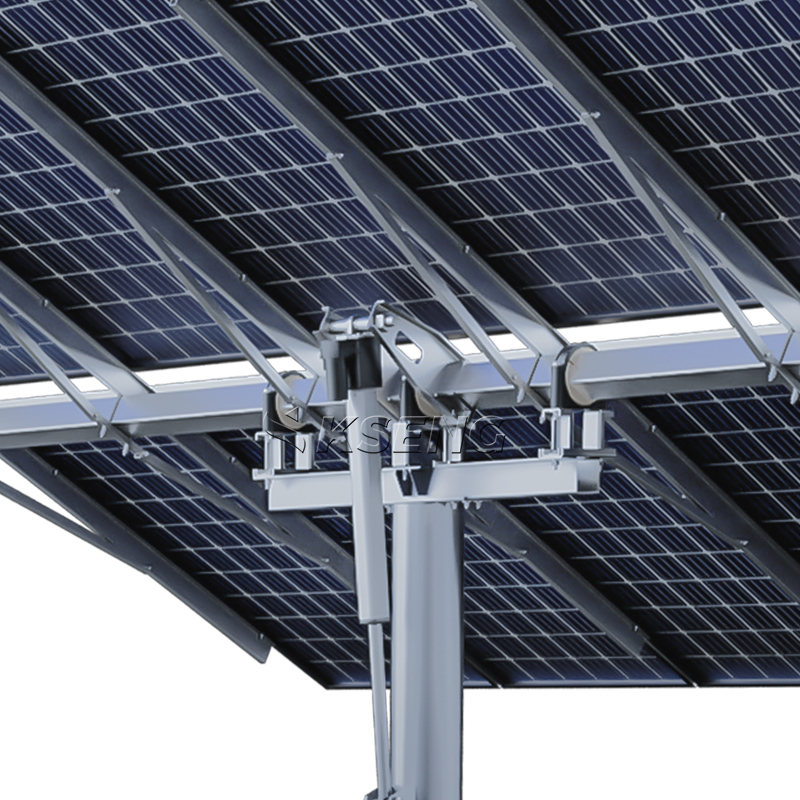
Evaluating drive durability requires looking closely at engineering specifications. Project developers must understand the exact differences between functional movement and survival limits. They must also scrutinize the materials used inside the housing.
First, developers must define the critical difference between holding torque and driving torque. Driving torque dictates normal daily operation. It is the rotational force required to smoothly tilt the panels from east to west on a calm day. Holding torque is entirely different. Holding torque is the absolute limit before mechanical yielding occurs under severe wind load. It represents the maximum static pressure the gear teeth can survive before snapping. While many cheaper drives offer sufficient driving torque, they dangerously lack the holding torque necessary to survive extreme weather.
We evaluate durability using specific criteria:
Holding Torque Metrics: Verify independent laboratory tests confirming the drive will not backdrive or shear at the maximum forecasted wind speeds for your specific region.
Gear Material and Machining: Hardened steel alloys and specialized bronze gearing resist long-term wear. Surface treatments, such as induction hardening on the worm threads, drastically increase fatigue limits over a 25-year lifecycle.
Environmental Sealing: Harsh climates destroy unsealed components. High IP ratings (IP65 or IP67) are mandatory. Desert deployment realities include ultra-fine, abrasive sand. If sand penetrates the gear enclosure, it acts as a grinding paste. Coastal environments introduce corrosive salt spray and driving rain. High IP ratings prevent both abrasive sand ingress and water damage.
Lubrication and Maintenance Intervals: Analyze operational differences carefully. Sealed-for-life units utilize high-grade synthetic greases. They require zero maintenance. Conversely, cheaper units demand manual annual greasing. Manual greasing introduces human error and increases continuous labor costs over the project lifetime.
| Torque Metric | Function | Primary Phase | Failure Risk if Inadequate |
|---|---|---|---|
| Driving Torque | Rotates the array during sun tracking | Active Tracking (Low Wind) | Stalling, motor burnout, inability to track |
| Holding Torque | Maintains static stow angle against wind | Passive Stow (High Wind) | Catastrophic gear shear, array destruction |
| Overturning Moment | Resists asymmetric loads from uneven wind | All Phases | Housing fracture, structural collapse |
Procuring a strong slew drive is only the first step. Proper implementation is equally crucial. Deployment realities dictate extreme challenges regarding geographic site adaptation. Developers often purchase identical hardware for varying climates. This approach carries significant risk. A robust solar tracker system must adapt physically to its environment. High-wind coastal areas require advanced anti-corrosion coatings like hot-dip galvanizing on the drive housing. High-temperature, abrasive desert sites require high-viscosity thermal grease to prevent internal lubricants from liquefying and leaking out.
Beyond environmental factors, engineers must address strict installation tolerances. Even the strongest gear will suffer premature wear if installed incorrectly. Field crews sometimes force misaligned torque tubes into the slew drive flange. This forces the system into a perpetual bind. The drive must fight internal friction every time it rotates. Structural supports installed outside strict alignment tolerances cause uneven load distribution. The gear teeth begin to grind against each other, drastically reducing the component's expected lifespan.
To mitigate this risk, teams must implement rigorous commissioning verification. Before turning the site over for commercial operation, technicians must perform specific field tests. They manually cycle the tracker from the extreme east to the extreme west. They monitor the electrical current draw of the drive motor. Sudden spikes in current draw indicate mechanical binding or poor alignment. Field tests ensure the drive engages and locks smoothly without anomalous vibration. Thorough commissioning safeguards the physical integrity of the entire plant.
EPCs (Engineering, Procurement, and Construction firms) must apply strict logic when specifying tracking hardware. Data-driven shortlisting cuts through marketing rhetoric. You should advise your procurement teams to request exact engineering data from manufacturers. Demand third-party wind tunnel testing reports. Look specifically for aeroelastic model tests, rather than rigid model tests, as they accurately simulate torsional flutter. Request accelerated wear testing reports. Verify all raw material certificates to ensure the steel alloys match the provided spec sheets.
Next, you must evaluate warranty constraints carefully. Scrutinize the fine print inside manufacturer agreements. Ensure the warranty fully covers realistic local wind events. Many contracts contain hidden loopholes. Some void the warranty if wind gusts exceed an artificially low threshold. Others mandate excessive, undocumented preventative maintenance to remain valid. If a warranty requires complex field lubrication every six months, the long-term operational losses will rapidly outweigh any initial discounts.
Finally, focus on actionable next steps during the bidding process. Recommend structuring your Request for Proposal (RFP) language carefully. Mandate specific slew drive safety factors within the tender documents. Establish strict holding torque minimums based on regional historical wind data. Require all vendors to prove their enclosed gears meet IP65 standards at minimum. A premium one axis solar tracking system depends entirely on airtight procurement specifications. Strong RFP language forces manufacturers to submit only highly durable, properly engineered drive solutions.
The central slew drive ultimately dictates the overall structural lifespan of any tracking asset. While software optimizations improve daily energy yields, the mechanical hardware determines whether the plant survives extreme weather. Holding torque, self-locking gear geometry, and robust environmental sealing are non-negotiable features for heavy-duty operational success.
Evaluating mechanical durability requires intense skepticism. Demanding verifiable engineering data is the only reliable way to safeguard a utility-scale solar investment. Relying on glossy brochures without independent testing reports introduces unacceptable risk into capital-intensive energy projects.
We strongly encourage project engineers and procurement managers to review their current supplier specifications immediately. Compare your existing hardware against established wind load limits and holding torque capacities. Upgrade your RFP language today to ensure your future plants withstand the harshest environmental challenges tomorrow.
A: Tracking precision refers to the system's ability to accurately follow the sun, dictating energy yield during normal weather. Holding torque is the maximum mechanical force the drive can resist while stationary, dictating the tracker's physical survival during extreme wind events.
A: A self-locking worm gear geometrically prevents external forces, like heavy wind gusts, from forcing the gear backward. It acts as an inherent mechanical brake, securing the panels safely without needing active electrical power or secondary brake systems.
A: Maintenance varies heavily by design. Modern, high-end enclosed units utilize synthetic lubricants and aim for zero-maintenance or minimal 5-to-10-year lubrication cycles. This significantly reduces ongoing operations and maintenance (O&M) labor.
A: Retrofitting is typically difficult due to proprietary mounting brackets and specific software integration requirements. Upgrading an older system's drive mechanism usually requires a comprehensive structural overhaul of the central drive block.