Views: 0 Author: Site Editor Publish Time: 2026-06-03 Origin: Site


Utility-scale solar developers and EPCs face a critical hardware decision today. The mounting structure is no longer just a passive rack holding panels. It acts as the primary lever for manipulating the Levelized Cost of Energy (LCOE) across your entire project portfolio. A solar tracker consistently models with higher absolute energy yields. However, the upfront capital expenditure (CAPEX) and ongoing operations and maintenance (O&M) bring complex challenges. These specific factors introduce significant mechanical and financial risks. If developers mismanage them, these risks easily erode projected project margins. This guide breaks down the financial modeling required to make the right choice. We explore the essential site-specific variables you must analyze. We also cover the real-world implementation realities developers face in the field. Read on to accurately evaluate traditional fixed-tilt systems against modern tracking architectures.
Yield vs. Cost Delta: Trackers typically generate 15% to 25% more energy than fixed-tilt systems, but require an initial CAPEX premium of 10% to 20%.
Land Use: Trackers require lower Ground Coverage Ratios (GCR) to avoid inter-row shading, meaning they demand more land per megawatt installed.
The Bifacial Multiplier: Pairing a solar panel tracking system with bifacial modules dramatically accelerates ROI, particularly in environments with high albedo.
O&M Realities: Long-term profitability models must account for actuator maintenance, sensor calibration, and software updates absent in fixed-tilt deployments.
You must define project success criteria properly from day one. Many developers look only at raw energy yield. This approach often leads to flawed financial models. You must shift the evaluation to optimal LCOE. This metric balances lifetime costs against lifetime generation accurately. Your ultimate goal is a maximized Internal Rate of Return (IRR). You achieve this by balancing upfront spending with predictable long-term revenue streams.
Grid constraint considerations matter heavily in modern energy markets. High solar penetration flattens midday energy prices. Time-of-day generation profiles directly affect your revenue projections. Power purchase agreement (PPA) pricing varies significantly throughout the day. Trackers widen the daily production curve. They capture higher-value evening peak rates. Fixed-tilt arrays peak sharply at solar noon. Grids often experience oversupply during this window. This leads to grid curtailment or negative energy pricing. A dynamic system helps you avoid this revenue trap.
Finally, consider the expected asset lifespan. Solar modules easily last 25 to 35 years. You must align this lifecycle with the mechanical lifespan of the racking hardware. Racking warranties require careful review. Fixed structures easily match module longevity without intervention. Moving parts introduce replacement cycles. You must plan for these inevitable hardware replacements in your long-term models. Financial surprises in year fifteen will destroy your project IRR.
Establishing the fixed-tilt baseline provides a helpful comparison. Installers optimize these static structures for a specific latitude and azimuth. They carry extremely low mechanical risk. They lack moving parts completely. This simplicity allows for highly standardized installation protocols. Field crews assemble them rapidly without specialized calibration. You also achieve high panel density on your site. This higher Ground Coverage Ratio (GCR) maximizes your megawatt capacity per available acre. When land is scarce, static density wins.
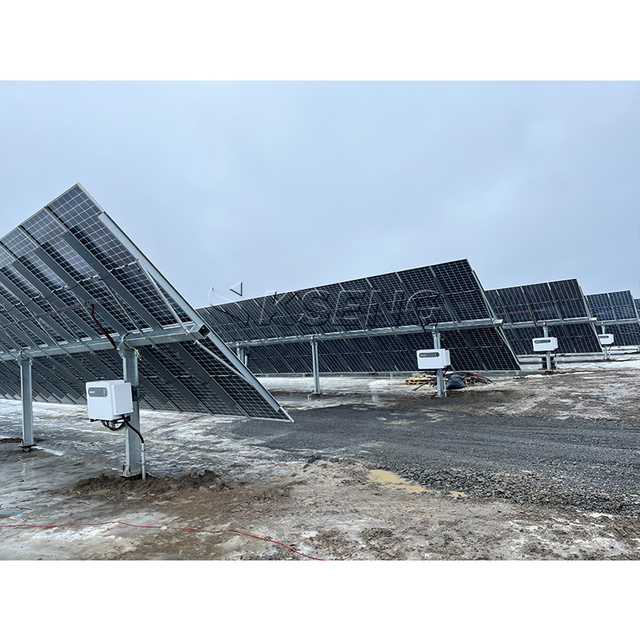
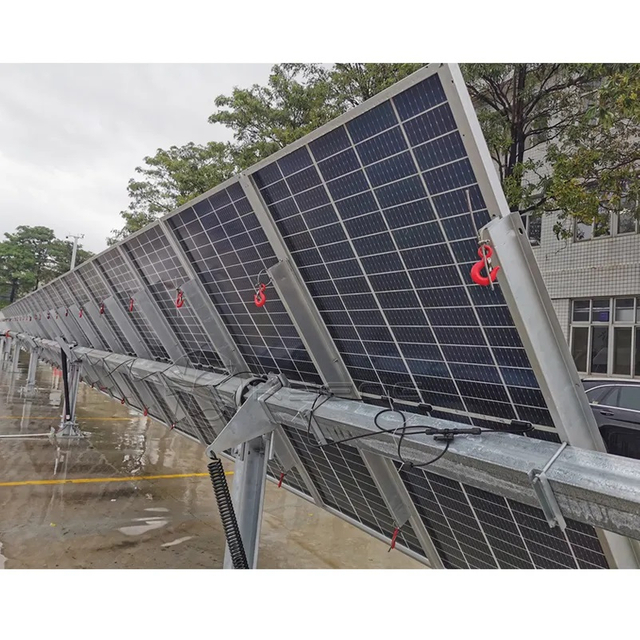
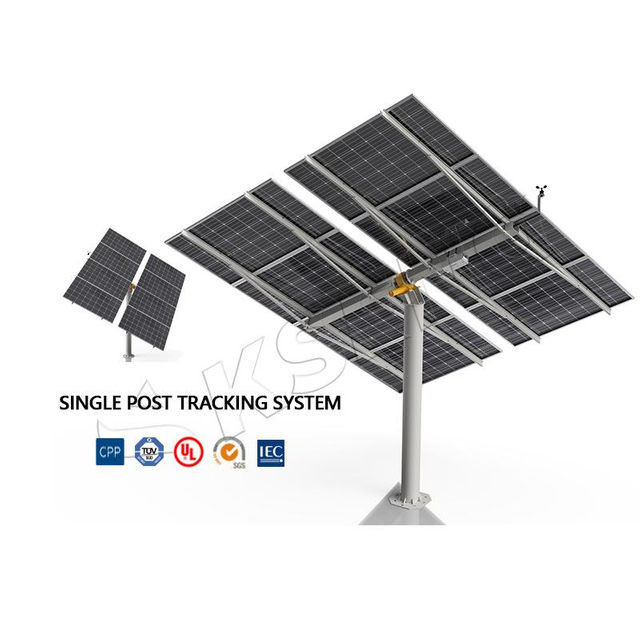
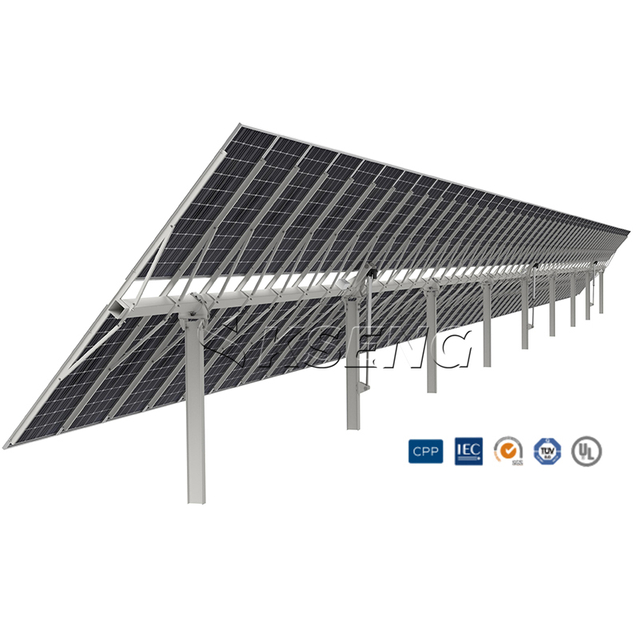
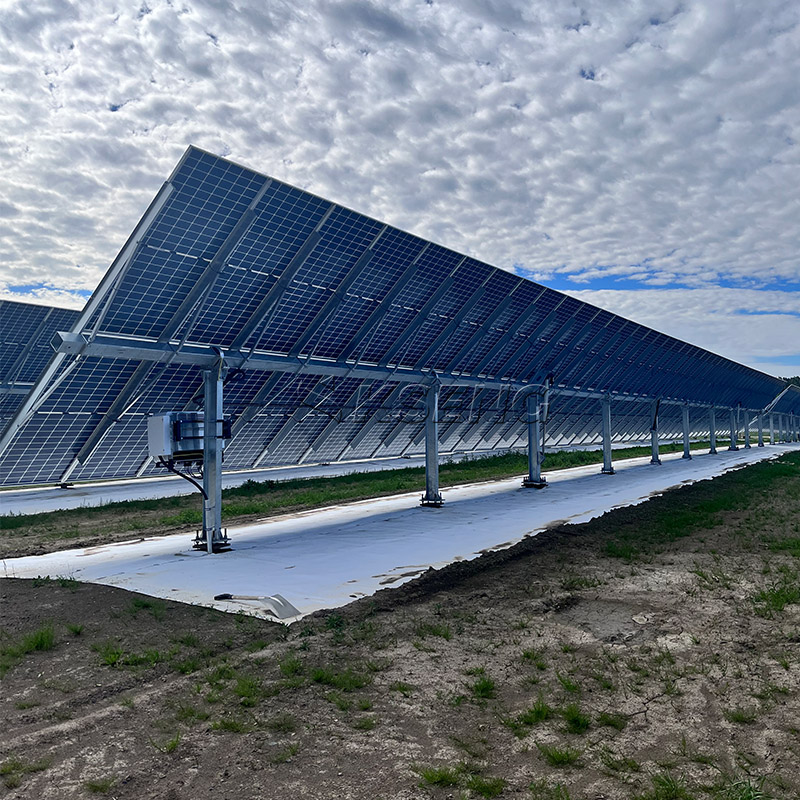
Next, evaluate the tracker advantage. You utilize a one axis solar tracking system to follow the sun. This horizontal axis tracks the solar trajectory smoothly from east to west. This continuous movement flattens the daily generation bell curve. It captures significantly more direct normal irradiance (DNI) during early mornings and late afternoons.
However, this introduces substantial hardware complexity. You must install precision drive motors and heavy torque tubes. You also rely on complex slewing drives and localized meteorological sensors. Each component requires exact alignment during field commissioning. A static system forgives minor installation errors. A tracking architecture demands strict mechanical tolerances to function properly over decades.
Accurate financial modeling dictates your ultimate technology choice. You must analyze initial capital outlays and recurring operational costs independently.
Break down your Capital Expenditure (CAPEX) first. Compare steel tonnage closely. Trackers often use less bulk steel per row than rigid structures. However, this specialized steel requires higher manufacturing precision. You face added trenching and wiring costs. Tracker controller networks require dedicated power and data pathways across the entire site. Labor cost deltas also play a massive role. Specialized tracker commissioning requires highly skilled technicians. Rapid fixed-tilt assembly relies primarily on standard general labor.
Move to Operational Expenditure (OPEX) projections. Preventative maintenance schedules dictate your long-term costs. Technicians must perform regular mechanical lubrication. They conduct frequent motor inspections and software updates. Vegetation management becomes uniquely crucial for trackers. Tall weeds cause severe motor fouling. Overgrown vegetation also interrupts sensitive backtracking sensors. Static arrays tolerate minor weed growth safely.
We recommend using a structured approach to calculate the exact inflection point. This is where the generation boost outpaces the blended CAPEX/OPEX premium over a 20-year horizon.
Establish your baseline fixed-tilt generation profile using standard meteorological data.
Model the theoretical tracking yield using specific local irradiance values.
Subtract your annualized OPEX premium from the projected tracker revenue.
Calculate the exact payback period for the initial CAPEX premium.
Determine the precise year the tracking architecture surpasses static profitability.
A common mistake is underestimating the compounding cost of minor O&M events over 20 years. Review the summary chart below to understand how cost categories diverge.
| Cost Category | Fixed-Tilt Baseline | Dynamic Tracking Profile |
|---|---|---|
| Hardware Costs | Standardized steel; low cost per MW. | Premium controllers, motors, and slewing drives. |
| Installation Labor | General labor; fast mechanical assembly. | Specialized labor; network commissioning required. |
| Vegetation Management | Low frequency; high tolerance for shading. | High frequency; zero tolerance for sensor blocking. |
| Component Replacements | Rare; primarily structural checks. | Routine; budgeted motor and actuator swaps. |
Topography and grading dictate your early engineering decisions. Fixed-tilt offers high tolerance for undulating terrain. You can install static racks on steep hills easily. Tracking systems face traditional limits on harsh slopes. They generally fail or bind mechanically on grades exceeding 10%. You must evaluate newer terrain-following tracking technologies. They exist, but they carry premium price tags. Do not ignore the hidden costs of civil works. Extensive site grading ruins project economics rapidly.
Evaluate environmental loading strictly. Evaluate local wind and snow realistic models. Fixed-tilt provides rigid stability under extreme weather events. Trackers rely completely on "stow mode" dynamics. High wind events force an active solar energy tracker into defensive positions. This flat or steeply angled posture protects the mechanics from structural failure. However, it temporarily reduces power output during the storm. Conversely, dynamic tilting offers strong snow shedding advantages. You can dump heavy snow loads actively by rotating the panels. Static panels must wait for natural melting.
Soil and geotechnical realities round out the essential site variables. Measure pile driving refusal rates early. Foundation engineering costs differ greatly between the two systems. Dynamic loads require deeper, more robust embedment to resist torsional forces. Static loads forgive shallower, standard foundations. A common mistake is utilizing standard static foundations for dynamic loads. You must engineer foundations to resist constant movement.
Supply chain dynamics require intense scrutiny. Fixed-tilt steel is a global commodity. You can source it competitively from multiple manufacturers anywhere. Proprietary tracker components create immediate vendor lock-in. If your specialized motor manufacturer goes bankrupt, you face severe spare parts shortages. You must vet the long-term financial stability of your hardware partner.
Evaluate software and control systems carefully. Cybersecurity matters immensely for centralized tracker networks. Hackers can manipulate tracker angles remotely if networks remain unprotected. Furthermore, the reliability of tracker algorithms impacts your yield directly. Backtracking software prevents inter-row self-shading on cloudy days. If this software fails or degrades, you lose the expected energy boost entirely. You must demand robust software service level agreements.
Watch out for warranty traps in your procurement contracts. Read the fine print carefully. Structural warranties often cover 10 to 20 years easily. Drive and motor warranties usually expire after 5 years. You must budget for motor replacements in year six. Best practice dictates securing a specialized O&M contract early. Ensure your field technicians hold specific certifications for your chosen hardware brand.
Shortlisting your mounting strategy requires project discipline. You must base decisions on empirical data rather than industry trends.
When you should default to a fixed-tilt deployment:
You face strictly constrained land footprints requiring maximum density.
You build in high-latitude sites with low direct irradiance.
You operate in severe weather zones like hurricane or typhoon corridors.
You require an absolute minimum O&M dependency due to remote site locations.
When you should mandate a dynamic tracking system:
You possess abundant, relatively flat land for wide row spacing.
You benefit from high direct normal irradiance (DNI) near the equator.
You deploy bifacial modules to capture high albedo from reflective ground cover.
You operate in markets where grid-connection caps favor broad daily generation curves over sheer peak-hour volume.
The choice between static mounts and a dynamic tracking structure is rarely definitive at first glance. You cannot rely on broad industry averages to ensure profitability. You must run site-specific topographical and financial simulations to find the truth. Trackers offer undeniable generation boosts, but they demand rigorous maintenance and larger land footprints. Static arrays offer peace of mind at the cost of evening energy capture.
Your immediate next steps involve detailed field analysis. We recommend conducting a preliminary geotechnical survey before signing any hardware contracts. Utilize 3D PV design software comprehensively. Run side-by-side LCOE scenarios using localized weather data. Compare the upfront CAPEX against the 20-year OPEX reality. Complete these steps before initiating formal procurement. Your final decision sets the financial trajectory for the entire lifespan of your asset.
A: Trackers typically generate a 15% to 25% baseline energy boost. However, exact performance depends heavily on your latitude and local weather. High direct sunlight areas see maximum gains. Cloudy or high-latitude regions experience significantly lower yield improvements.
A: Yes. Trackers require a lower Ground Coverage Ratio (GCR). You must space the panel rows further apart to prevent inter-row shading during morning and evening tracking angles. This spacing reduces your megawatt capacity per acre compared to dense fixed-tilt layouts.
A: Yes, but with specific mechanical considerations. Modern trackers utilize automated wind-stow modes. They rotate into defensive postures during high winds to prevent structural damage. For snow, specialized algorithms allow panels to tilt steeply, actively shedding heavy snow loads.
A: Maintenance costs are noticeably higher than static systems. You must budget for routine component checks, actuator lubrication, and eventual motor replacements. This specialized mechanical OPEX is entirely separate from standard panel cleaning and requires certified field technicians.