Views: 0 Author: Site Editor Publish Time: 2026-06-01 Origin: Site


Transitioning from fixed-tilt to tracking arrays is no longer a technological novelty. It has become a standard commercial requirement for utility-scale generation projects exceeding 10MW. While dual-axis setups maximize absolute energy yield, the utility sector overwhelmingly standardizes on the horizontal setup to optimize the Levelized Cost of Energy (LCOE). Failing to select the proper infrastructure can expose a plant to severe mechanical failures and misaligned production curves.
This guide skips basic solar definitions to focus strictly on commercial execution. We provide project developers, EPCs, and investors with an evidence-based framework for evaluating, procuring, and deploying these assets. You will learn how to navigate structural limits, aerodynamic vulnerabilities, and layout strategies without facing unforeseen capital or maintenance overruns.
LCOE Over Absolute Yield: Single-axis trackers offer a 15–25% yield gain with an acceptable CAPEX premium, striking the optimal economic balance for large-scale deployments.
TOU Advantage: By extending production into late afternoon hours, tracking aligns generation with peak Time-of-Use (TOU) electricity rates.
Implementation Realities: Long-term profitability hinges on strict installation tolerances (e.g., ±25mm pile accuracy) and proven algorithmic backtracking to prevent row-to-row shading.
Risk Mitigation: Wind load defense (stow mechanics) and soil compatibility are the primary failure vectors that dictate system viability.
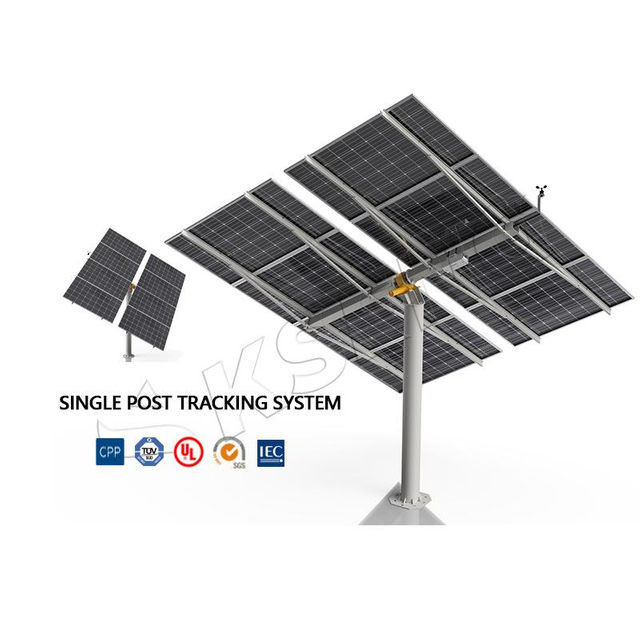
Utility-scale project developers must balance energy generation with long-term reliability. When evaluating mounting architectures, the choice typically narrows down to fixed-tilt, horizontal single-axis, or dual-axis systems. Dual-axis trackers follow the sun across both azimuth and elevation. They theoretically capture the absolute maximum amount of sunlight. However, we consistently dismiss dual-axis configurations for large utility projects. They introduce prohibitive operational complexity. The extensive moving parts suffer from high mechanical failure rates. Furthermore, dual-axis arrays demand massive land footprints to avoid shading, making them economically unviable for megawatt-scale deployments.
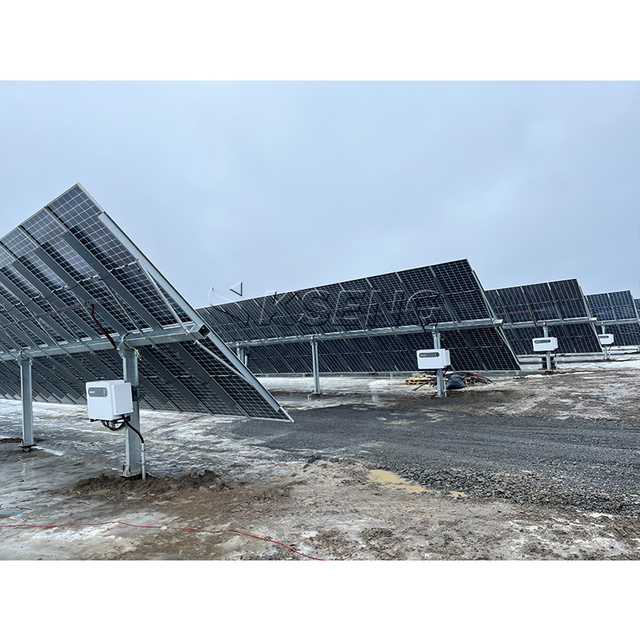
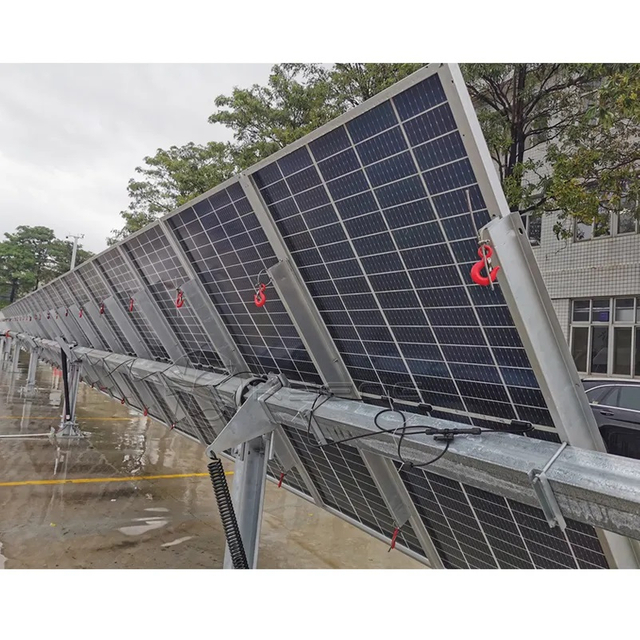
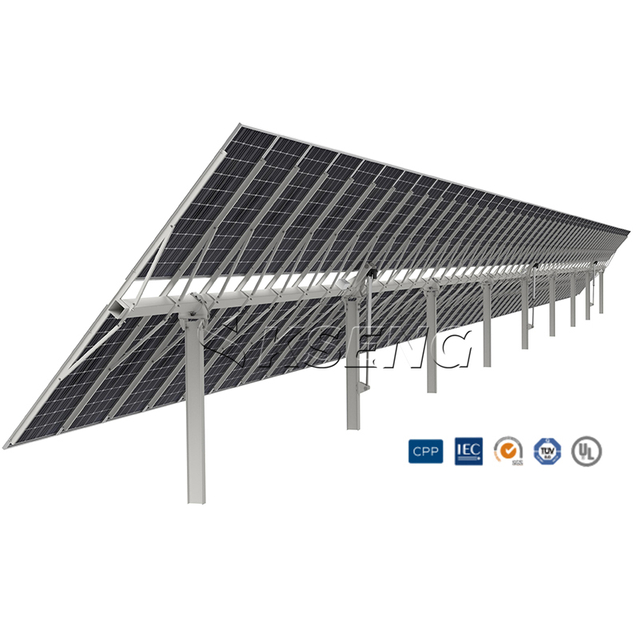
A well-engineered solar tracker represents the commercial sweet spot. It achieves roughly 80% of the energy yield benefits seen in dual-axis configurations. More importantly, it secures these gains at a fraction of the structural and maintenance costs. The horizontal movement requires fewer motors, simpler control logic, and far less steel.
Grid economics have evolved. Utilities increasingly penalize overproduction during midday hours and reward generation during the late afternoon. Implementing a solar panel tracking system fundamentally alters a plant's production curve. Fixed-tilt panels produce a narrow, sharp spike around noon. In contrast, trackers produce a wider, "fattened" generation curve.
The modules face eastward in the early morning and gradually rotate westward. They continue capturing direct irradiance long after fixed panels lose efficiency. This prolonged generation aligns perfectly with lucrative late-afternoon demand peaks. Developers capitalize on peak Time-of-Use (TOU) rates, transforming raw energy production into maximized financial returns.
Critics occasionally argue about the power required to operate active motors. Modern active trackers consume very little power to execute their rotations. Engineering advancements have driven self-consumption rates down dramatically. Today, the parasitic load from tracker motors typically accounts for only 1% to 5% of the total generated output. The 15–25% overall yield gain easily absorbs this minor operational energy cost.
| Mounting Technology | Relative Energy Gain | Maintenance Complexity | Utility-Scale Suitability |
|---|---|---|---|
| Fixed-Tilt | Baseline (0%) | Very Low | High (for extreme terrain/snow) |
| Horizontal Single-Axis | +15% to +25% | Moderate | Very High (Industry Standard) |
| Dual-Axis | +30% to +40% | Very High | Low (Better for space-constrained C&I) |
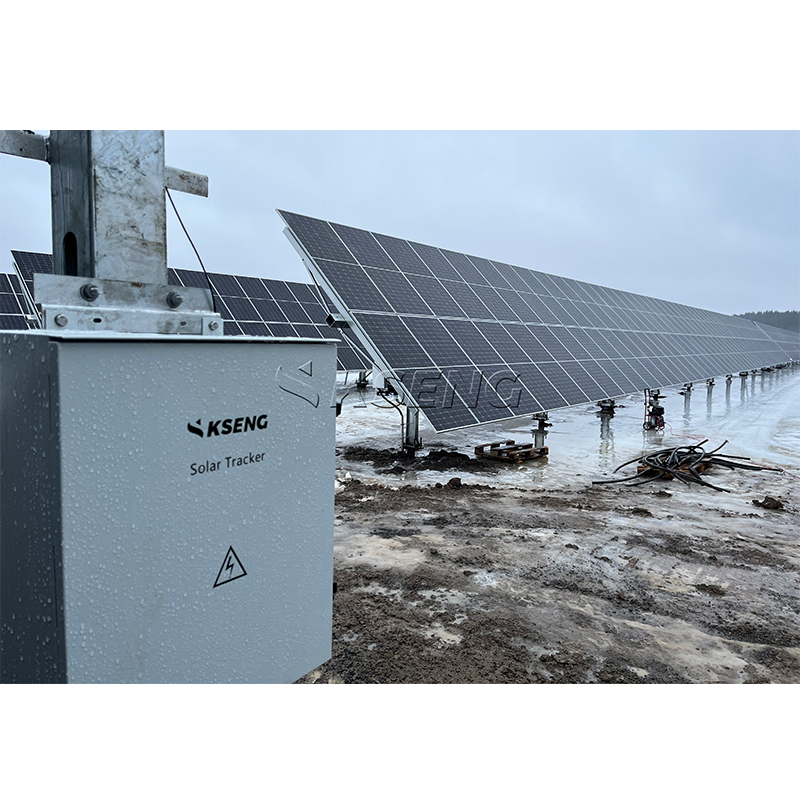
To evaluate vendor proposals effectively, developers must understand the underlying components. We can conceptualize a modern solar tracker system as a biological entity. It relies on a skeleton, muscles, senses, and a brain to function reliably in harsh outdoor environments.
The structural foundation dictates the physical survival of the array. The primary components include:
Torque Tubes: The central spine holding the photovoltaic modules. They must resist twisting under heavy loads.
Drive Shafts: The mechanical linkages transferring rotational force from the motors across multiple rows.
Foundation Piles: Micro-piles or helical piles driven deep into the soil to anchor the system.
Dampeners: Shock absorbers installed along the array. Wind-induced oscillation presents the largest structural threat to utility plants. Quality dampeners suppress aeroelastic flutter, preventing the steel from tearing itself apart during storms.
Motion relies on robust drive mechanics. Vendors generally employ either slewing drives or linear actuators. Slewing drives offer high rotational torque. Linear actuators provide precise push-pull mechanics. Developers must specify reliable motor types, choosing between standard DC or Brushless DC (BLDC) motors. BLDC variants often provide longer lifespans due to reduced internal friction.
Gearbox enclosures demand rigorous scrutiny. Water and dust ingress destroy internal gearing rapidly. You must require sealed gearboxes carrying an IP65+ rating. Additionally, specify self-lubricating polymer bearings. They eliminate the need for manual greasing, saving thousands of labor hours over a twenty-year period.
An array cannot react without accurate environmental data. Precision sensors act as the sensory nervous system. Micro-Electro-Mechanical Systems (MEMS) inclinometers verify the exact tilt angle of the torque tubes. Anemometers constantly monitor wind speeds across the site. Irradiance meters measure sunlight intensity to help the logic controllers optimize daily positioning.
Hardware remains useless without intelligent commands. The control software relies on GPS-synchronized astronomical algorithms. The controllers calculate the exact solar vector based on latitude, longitude, and exact time. They update panel positions fractionally throughout the day.
Algorithmic 3D Backtracking separates exceptional systems from average ones. During the early morning and late evening, the low sun angle causes adjacent panel rows to cast long shadows. Partial shading triggers bypass diodes and causes severe mismatch energy losses. Backtracking software intelligently flattens the panel angle slightly during these hours. The array intentionally misses perfect sun alignment to ensure no row casts a shadow on its neighbor. This logic preserves maximum overall array output.
Utility-scale economics depend heavily on controlling upfront expenditures while guaranteeing long-term production. Implementing a single axis solar tracker requires a distinct financial strategy compared to fixed mounting structures.
Procurement teams must benchmark hardware costs accurately. Historically, utility-scale tracker hardware averages between $0.15 and $0.35 per watt. This range fluctuates based on global steel commodity indices and regional freight logistics. The hardware premium represents an upfront capital expenditure (CAPEX) hurdle. However, isolating CAPEX from generation data leads to poor project decisions.
Structural Steel (Piles, Tubes): ~50% - 60% of tracker cost
Drive Systems (Motors, Gearboxes): ~15% - 20% of tracker cost
Control Logic & Sensors: ~10% - 15% of tracker cost
Installation Hardware & Fasteners: ~10% of tracker cost
Labor rates dictate actual deployment budgets. Engineering Procurement and Construction (EPC) firms actively seek features reducing field assembly time. Modular designs drop labor requirements significantly. Pre-assembled brackets eliminate the need for workers to handle hundreds of loose bolts per row. Articulated drive struts accommodate uneven terrain seamlessly, eliminating expensive site grading operations. Additionally, sites battling rocky soil often utilize pre-cast concrete foundations rather than attempting to force driven piles through impenetrable bedrock.
The financial model justifies the technology. A well-designed plant typically sees a 15–25% increase in annual energy yield. This massive influx of billable generation quickly offsets the initial hardware premium. Generalized financial modeling shows developers recouping the extra capital investment within two to four years. Once the plant crosses this payback threshold, the facility enjoys a permanently lowered LCOE for the remaining twenty years of its operational lifespan. Increased revenue drops straight to the bottom line.
The physical landscape dictates structural engineering requirements. You cannot force a generic tracking template onto challenging geography.
Standard tracking architectures handle topographical variations up to 10 or 15 degrees. Slopes exceeding these limits require specialized engineering. EPCs often deploy staggered row configurations to follow the natural contour of the land. Sites featuring highly undulating terrain force developers to procure longer, thicker foundation piles to maintain horizontal tube alignment. This strategy quickly inflates steel procurement budgets.
Below-ground conditions pose significant project risks. Inadequate geotechnical surveying routinely ruins otherwise sound solar plants. Soft soil profiles fail to support lateral wind loads. High frost heave environments physically push foundation piles upward during winter freezes. Foundation settlement directly misaligns the torque tubes above ground. Once a torque tube loses its true linear alignment, the rotational bearings bind. This friction overloads the drive motors, accelerating gearbox wear and triggering cascading failures.
Civil engineers must optimize the Ground Cover Ratio (GCR). GCR represents the ratio of module area to total land area. For single-axis configurations, designers typically space the rows at distances equal to 2.5 to 3 times the row height. Tighter spacing reduces land acquisition costs but creates severe shadowing. Wider spacing eliminates shadowing but inflates land lease expenses and cable trenching distances. Intelligent GCR planning balances land constraints against algorithmic backtracking efficiency.
Deploying a solar energy tracker involves managing strict construction tolerances and preparing for catastrophic weather events. Long-term reliability does not happen by accident.
Site construction managers enforce ruthless quality assurance. Foundation pile driving tolerances serve as a prime example. EPC crews must generally maintain pile placement accuracy strictly within ±25mm of the engineered centerline. Rushing the pile-driving phase introduces slight deviations. These small deviations compound across a hundred-meter row. The twisting torque tube eventually binds the mechanical bearings. The system interprets this binding as a mechanical fault, forcing unexpected downtime.
Wind destroys unprotected solar arrays. Large module surface areas act like airplane wings, generating massive lift and drag forces. The control system must possess highly responsive fail-safe algorithms. When anemometers detect wind speeds approaching critical thresholds—typically around 20 meters per second—the system must trigger a defensive stow strategy.
The motors rotate the modules into a predetermined stow position. Some vendors program a perfectly flat profile (0 degrees) to reduce drag. Others program a slightly tilted profile to prevent destructive aeroelastic flutter. Surviving a microburst or severe storm depends entirely on the speed and reliability of this stow mechanism.
Industry marketers often promote "maintenance-free" solutions. We must debunk this myth. Every mechanical asset requires ongoing Operations and Maintenance (O&M). Realistic maintenance schedules prevent minor issues from becoming major outages. Technicians must perform routine lubrication checks if the plant utilizes older, non-self-lubricating bearings. Cable management inspections prove equally vital. Constant rotation fatigues wire harnesses if they lack adequate slack. Technicians verify wire bend radii to prevent electrical shorts. Finally, MEMS sensors require periodic calibration to ensure the astronomical algorithm tracks true solar south.
Selecting the right manufacturing partner mitigates long-term operational risks. Treat vendor shortlisting as an exercise in risk management rather than a simple price comparison.
Bankability and Track Record: Demand evidence of successful historical deployments. Require case studies showing their equipment surviving harsh environments matching your site. A tracker that performs well in a mild climate may fail catastrophically in heavy snow or abrasive desert sand.
Testing and Compliance Standards: Do not accept uncertified steel. Insist vendors provide IEC 62817 certification. This standard dictates comprehensive design qualification specifically for tracking hardware. Furthermore, require UL 2703 compliance to guarantee safe mounting system structural integrity and proper electrical grounding paths.
Software and SCADA Integration: The best steel fails without smart controls. Evaluate the vendor's proprietary control platform thoroughly. Verify it integrates seamlessly into your chosen plant SCADA system via standard protocols like Modbus TCP/IP. Prioritize vendors offering predictive maintenance alerts. Software that detects minor motor over-current anomalies can warn technicians days before a physical gear breakdown occurs.
The decision to implement horizontal tracking technology is no longer about proving whether the concept works. It revolves entirely around precise commercial execution. Developers must match specific structural designs and foundation strategies to the exact topographical and aerodynamic profile of their site. By standardizing high-quality dampeners, sealed IP65 gearboxes, and rigorous pile-driving tolerances, investors protect their revenue streams.
We recommend prioritizing vendors offering proven wind-stow mechanisms and advanced 3D backtracking algorithms. Evaluate the structural flexibility they provide for uneven terrain. When you execute procurement and installation correctly, the resulting energy yield permanently lowers your energy cost, ensuring long-term utility-scale profitability.
A: Trackers generally carry a 20% to 30% capital expenditure (CAPEX) premium over standard fixed-tilt mounting structures. However, they generate 15% to 25% more electricity annually. This substantial energy yield gain typically offsets the initial premium within two to four years, lowering long-term project costs.
A: Modern tracking systems utilize active meteorological sensors. During high winds, the software triggers an automated stow mechanism, rotating the panels flat or slightly tilted to minimize aerodynamic drag. During severe hail events, systems transition into a high-angle defensive posture to deflect direct hailstone impacts safely.
A: Yes. Standard systems accommodate moderate slopes ranging from 10 to 15 degrees. For highly undulating or uneven terrain, manufacturers utilize articulated drive struts and staggered row configurations. These terrain-following designs eliminate the need for extensive and costly earth-grading operations before installation.
A: You can expect a heavy-duty tracking structure to last 20 to 25 years, matching the lifespan of the photovoltaic panels. Achieving this longevity requires strict adherence to baseline maintenance schedules, including routine sensor calibration, cable management inspections, and eventual drive motor replacements.