In the global transition to renewable energy,
ground-mounted solar systems have become a cornerstone of large-scale solar power deployment, thanks to their high energy yield, flexible site selection, and easy maintenance. However, the success of any ground solar project hinges on its foundation—often referred to as the "root system" of the solar array. A well-designed and constructed foundation not only supports the weight of solar panels and mounting structures but also resists external forces such as wind, snow, seismic activity, and soil settlement, ensuring the system operates stably for its 25-30 year service life. As a leader in solar energy solutions, Ksengenergy is committed to sharing the latest foundation construction technology for
ground solar mounting, helping industry partners optimize project efficiency and reduce long-term risks.
1. The Importance of Foundation Construction for Ground Solar Mounting
The foundation serves as the critical interface between the solar mounting structure and the ground, transferring all structural loads—including the dead weight of panels, wind uplift, snow accumulation, and seismic forces—to the underlying soil or rock strata. According to the Solar Energy Industries Association (SEIA), 23% of solar system failures can be traced back to foundation issues, which are not only expensive to repair but also disrupt energy production. For ground solar projects, whether utility-scale farms or distributed commercial systems, the foundation must adapt to diverse soil conditions, varying groundwater levels, and seasonal changes (such as frost penetration in cold climates) to maintain structural integrity over decades. Investing in advanced foundation construction technology is therefore not just a cost, but a long-term investment in the reliability and profitability of the solar project.
2. Main Types of Foundation Construction Technology for Ground Solar Mounting
The selection of foundation type depends on multiple factors, including soil characteristics, project scale, local climate, and budget. Below are the most widely used foundation technologies in ground solar mounting, along with their key features and applications:
2.1 Ground Screw Foundation
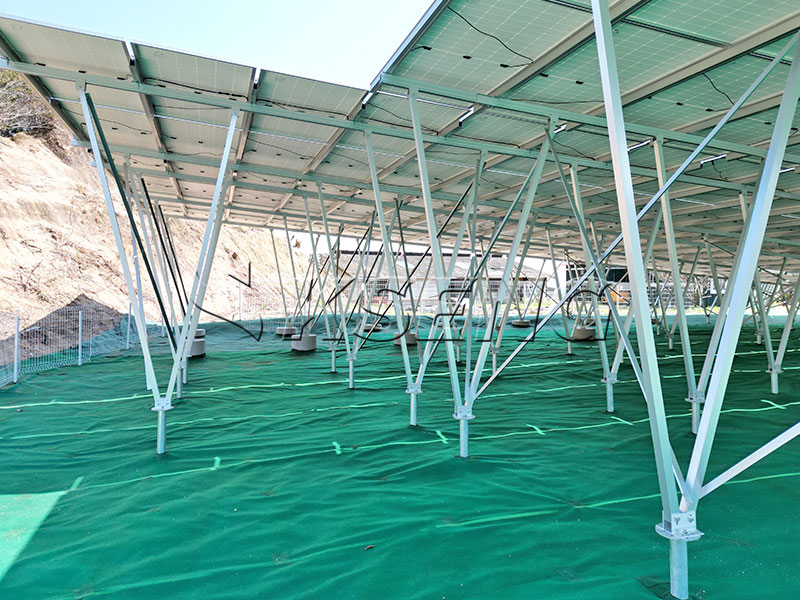
As an eco-friendly and efficient solution, ground screw foundations have gained rapid popularity in recent years, especially in regions with strict environmental standards and high labor costs. These foundations consist of steel anchors with spiral blades that are drilled directly into the soil using hydraulic screw-driving machinery, eliminating the need for excavation or concrete curing. Ground screw foundations offer significant advantages: they can be installed 60% faster than traditional concrete foundations, cause minimal environmental disturbance, and are reusable or relocatable—making them ideal for agricultural PV projects, distributed generation systems, and temporary installations. They perform well in sandy, loamy, or clay soils but are not suitable for rocky or extremely hard ground. Ksengenergy’s ground screw foundation solutions are engineered to meet local load requirements, with corrosion-resistant coatings to extend service life.
2.2 Concrete Foundation
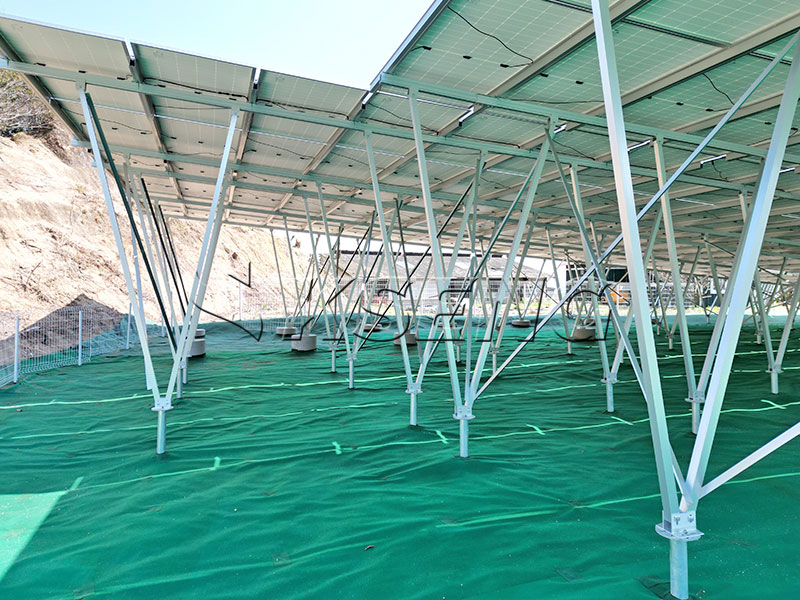
Concrete foundations remain a traditional and reliable choice for ground solar mounting, particularly for utility-scale projects that require high load-bearing capacity and long-term stability. Common types include concrete piers, independent footings, and strip footings. Concrete piers are drilled into the ground and filled with concrete, making them suitable for soft soils or areas with high groundwater levels; independent footings are used for individual mounting posts in stable soil conditions; and strip footings are continuous concrete beams that support multiple mounting posts, optimizing material usage and reducing costs for large-scale projects. While concrete foundations offer excellent durability and compatibility with all soil types, they require a 7-14 day curing period, increasing project timelines and labor costs. Ksengenergy’s concrete foundation solutions incorporate advanced mix designs to accelerate curing and enhance resistance to frost heave and corrosion.
2.3 Pile-Driven Foundation
Pile-driven foundations are the dominant choice for utility-scale ground solar projects, thanks to their rapid installation and high structural capacity. Steel piles (usually H-beams or C-sections) are driven vertically into the soil using hydraulic piling machines, without the need for excavation. This method is highly efficient—two workers with a hydraulic hammer can install 80-120 piles per day—and adaptable to most soil types, including dense sand, gravel, and clay. Pile-driven foundations excel in resisting wind uplift and lateral forces, making them ideal for coastal or high-wind regions. However, they require specialized equipment and skilled operators to ensure proper pile depth and垂直度 (verticality). Ksengenergy offers customized pile-driven solutions, including GPS-guided installation for precise positioning and improved project efficiency.
2.4 Specialized Foundations for Complex Conditions
For projects in challenging environments—such as rocky terrain, contaminated sites, or frost-prone regions—specialized foundation technologies are required. Rock anchoring foundations use drilled anchors to secure the mounting structure to bedrock, while ballasted foundations (without ground penetration) are suitable for flat roofs or paved areas where excavation is not allowed. In cold climates, frost-protected foundations are designed to extend below the frost line, preventing frost heave from damaging the structure. Ksengenergy’s engineering team specializes in designing tailored solutions for complex sites, ensuring compliance with local building codes and environmental regulations.
3. Key Design and Construction Best Practices
Adherence to best practices is critical. Below are the core guidelines for foundation construction technology for ground solar mounting:
3.1 Conduct Comprehensive Geotechnical Investigation
Before construction, a detailed geotechnical survey is essential to analyze soil type, bearing capacity, groundwater level, and frost depth. This data determines the foundation type, embedment depth, and load-bearing requirements, preventing underspecification or over-engineering. Ksengenergy partners with professional geotechnical firms to conduct on-site surveys, ensuring the foundation design is tailored to the site’s unique conditions.
3.2 Prioritize Load Capacity and Structural Stability
The foundation must be designed to withstand all applicable loads, including dead load (solar panels, mounting structure), live load (maintenance personnel), and environmental loads (wind, snow, seismic activity). For example, in high-wind regions, the foundation must resist uplift forces, while in snowy areas, it must support additional snow weight. Compliance with international standards—such as ASCE 7-22, IBC 2021, and ASTM D1586—ensures structural safety and regulatory compliance.
3.3 Optimize Installation Efficiency
Efficient installation reduces project timelines and costs, while also ensuring consistent quality. For ground screw and pile-driven foundations, using GPS-guided machinery improves positioning accuracy and installation speed. For concrete foundations, precast components can shorten curing time and reduce on-site labor. Ksengenergy’s construction team uses advanced equipment and standardized processes to ensure fast, high-quality installation.
3.4 Focus on Corrosion and Long-Term Maintenance
Ground solar foundations are exposed to moisture, soil chemicals, and extreme weather, making corrosion resistance critical. Steel components should be galvanized or coated with anti-corrosion materials (such as ASTM A123-compliant galvanizing) to extend service life. Regular inspection and maintenance—including checking for loose fasteners, corrosion, and soil settlement—help prevent foundation failure and ensure the system operates optimally.
4. Innovations in Foundation Construction Technology
The solar industry is constantly evolving, and foundation technology is no exception. Recent innovations aim to improve efficiency, reduce costs, and enhance sustainability:
AI-Powered Site Analysis: Advanced AI tools analyze geospatial data to optimize foundation placement, reducing material usage and improving load distribution.
Lightweight and Modular Foundations: New materials—such as high-strength aluminum and composite materials—reduce foundation weight while maintaining structural capacity, making them ideal for remote or difficult-to-access sites.
Adjustable Tilt Foundations: These foundations allow for seasonal adjustment of solar panel tilt angle, maximizing energy yield throughout the year.
Eco-Friendly Materials: Recycled concrete and sustainable steel are being used to reduce the carbon footprint of foundation construction, aligning with global sustainability goals.
5. Ksengenergy’s Foundation Construction Solutions
At Ksengenergy, we understand that every ground solar project is unique. Our team of experienced engineers and construction professionals provides end-to-end foundation solutions, from geotechnical survey and design to installation and maintenance. We leverage the latest foundation construction technology to deliver tailored solutions that meet your project’s specific needs—whether it’s a utility-scale solar farm, a commercial distributed system, or an agricultural PV project. Our commitment to quality, efficiency, and sustainability ensures that your solar foundation is built to last, maximizing energy yield and reducing long-term costs.
Whether you’re looking for ground screw, concrete, or pile-driven foundations, Ksengenergy has the expertise and resources to bring your project to life. Contact us today to learn more about our foundation construction technology for ground solar mounting and how we can help you achieve your renewable energy goals.