


 |


| Quantity: | |
|---|---|
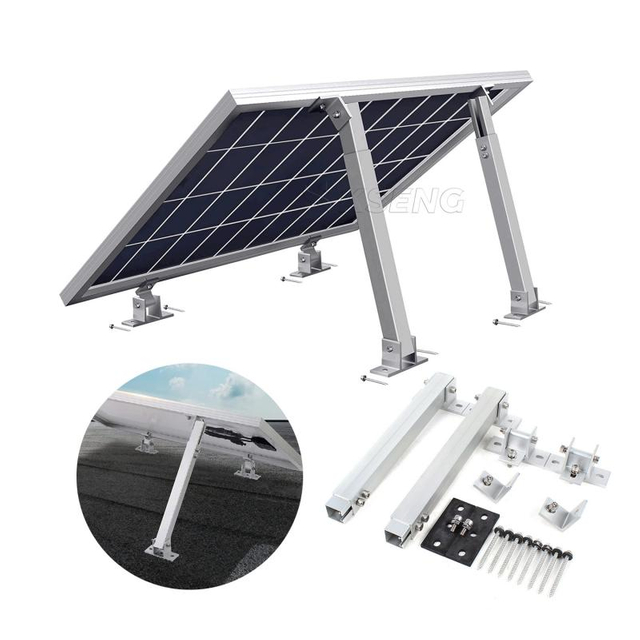
As a premier manufacturer and supplier of renewable energy infrastructure, we present the Mg-Al-Zn Ballast Mount Non-Penetrating Flat Roof Solar System. Engineered for commercial and utility-scale projects, this mounting solution delivers structural integrity without compromising roof warranties.
Constructed from advanced Zn-Al-Mg coated steel
Zero-penetration ballasted design
TUV-certified engineering
Optimized for rapid deployment
When outfitting expansive commercial rooftops or ground-level garden arrays, safeguarding the underlying structure is paramount. The Mg-Al-Zn Ballast Mount offers a masterclass in non-destructive solar deployment. Running your hand along the meticulously formed Zn-Al-Mg coated steel components, you will immediately notice the smooth, heavy-duty finish—a tactile testament to its superior metallurgical composition. This self-healing metallic coating actively resists the aggressive oxidation typically found in high-humidity or coastal environments, ensuring the framework maintains its pristine, industrial-grade appearance decade after decade.
By eliminating the need for mechanical anchors, this system silences the disruptive noise of heavy drilling during installation. Instead, the satisfying click and solid engagement of highly pre-assembled components dictate the workflow. It transforms a traditionally labor-intensive process into a streamlined operation. Project managers will appreciate the immediate reduction in deployment timelines, while facility owners gain absolute peace of mind knowing their delicate waterproofing membranes remain entirely unpunctured, secure, and fully capable of repelling heavy rainfall.
Precision engineering requires exact metrics and transparent data. The following table outlines the rigorous technical parameters that define this mounting structure. Every specification has been validated through extensive stress testing to guarantee compliance with international building codes and safety regulations. From the specific 20-degree tilt angle optimized for maximum solar irradiance capture, to the robust load-bearing capacities designed to withstand severe weather events, these figures represent our commitment to uncompromising quality. Procurement specialists can rely on these verified metrics to ensure seamless integration into their upcoming utility-scale or commercial property developments.
| Specification Category | Technical Details |
|---|---|
| Material | Zn-Al-Mg Coated Steel (more affordable than aluminum) |
| Module Compatibility | Framed and frameless solar panels |
| Angle | 20 degrees |
| Load Capacity | Wind load 0.56 kN/m², Snow load 1.0 kN/m² |
| Warranty | 10 years |
| Service Life | 25+ years |
Maximizing operational efficiency while minimizing overhead requires intelligent engineering. This mounting framework is meticulously crafted to address the most pressing challenges faced during large-scale solar rollouts, delivering tangible improvements to your bottom line and accelerating your project timelines.

Accelerated Deployment: Highly pre-assembled modules arrive ready for immediate positioning, drastically cutting down the hours spent sorting and assembling loose hardware on the roof.
Zero Roof Compromise: The intelligent ballasted architecture utilizes strategic weight distribution rather than destructive lag bolts, entirely eliminating the risk of water ingress and subsequent structural decay.
Advanced Metallurgical Defense: The proprietary Zinc-Aluminum-Magnesium coating provides an active, self-healing barrier against corrosive elements, far outperforming traditional hot-dip galvanization.
Universal Panel Integration: Thoughtfully engineered clamps securely accommodate both framed and frameless photovoltaic modules, granting procurement teams the flexibility to source diverse panel technologies without compatibility concerns.
Selecting the right mounting infrastructure dictates the long-term financial and operational success of any solar initiative. Here is how this system elevates project outcomes across every critical performance metric.
Transitioning away from conventional materials, this system utilizes advanced Zn-Al-Mg coated steel. This cutting-edge alloy delivers exceptional weather resistance that rivals premium aluminum, yet significantly lowers the initial material acquisition cost. The self-repairing nature of the coating ensures that minor scratches sustained during transit or installation are automatically protected against rust, guaranteeing a formidable service life exceeding 25 years even in harsh outdoor environments.
Commercial flat roofs, particularly those utilizing TPO or EPDM membranes, are highly sensitive to punctures. This non-penetrating, ballasted solution relies on precise aerodynamic design and concrete block weighting to secure the array. By completely bypassing the need for roof penetrations, it eradicates the primary cause of post-installation leaks, making it the definitive choice for sensitive commercial, industrial, and leased properties.

Time spent on the roof directly correlates to escalating project budgets. Featuring a high degree of pre-assembly, this system arrives on-site ready to unfold and lock into place. By eliminating the necessity for complex mechanical drilling, chemical anchoring, or intricate on-site fabrication, installation crews can move rapidly from one array to the next. This streamlined workflow dramatically reduces the total man-hours required, driving down the overall labor expenditures for engineering teams.
When facing unpredictable weather patterns, structural failure is not an option. Subjected to rigorous mechanical testing, this framework confidently withstands wind loads of up to 0.56 kN/m² and heavy snow accumulations of 1.0 kN/m². Backed by the globally recognized TUV certification, it provides an unshakeable foundation that meets the most stringent international safety standards, ensuring your energy assets remain secure during severe meteorological events.
Balancing capital expenditure with long-term performance is the ultimate goal for project developers. Serving as the perfect alternative to expensive aluminum racking, this Zn-Al-Mg system offers a highly competitive price point without sacrificing a fraction of durability or stability. This strategic reduction in upfront structural costs allows engineering firms to optimize their total project budgets, thereby accelerating the break-even point and maximizing the overall Return on Investment.

Project scopes frequently evolve, demanding adaptable hardware. This system is engineered for universal compatibility, seamlessly securing both mainstream framed and delicate frameless solar panels. Its versatile footprint is not restricted solely to concrete or membrane flat roofs; it performs equally well when deployed as a low-profile ground mount in garden settings or open flat terrain, providing immense flexibility for diverse site requirements.
Partnering with the right manufacturer transforms a standard procurement transaction into a strategic business advantage. We do not merely supply metal brackets; we engineer comprehensive structural solutions designed to protect your investments and streamline your operations from day one.
Uncompromising Quality Control: Every batch of Zn-Al-Mg steel undergoes rigorous metallurgical analysis before forming. We meticulously inspect the coating thickness and structural integrity, ensuring that the tactile solidity you feel translates perfectly into decades of reliable field performance.
Engineering Precision: Our design philosophy centers on the installer's experience. By refining the geometry of every clamp and rail, we eliminate the frustrating friction of poorly mated parts, resulting in a seamless, satisfying assembly process that your field technicians will appreciate.
Scalable Production Capacity: We understand the critical nature of project deadlines. Our advanced manufacturing facilities are equipped to handle massive volume requirements without extending lead times, ensuring your materials arrive precisely when the deployment schedule dictates.
Dedicated Technical Support: From initial load calculations to on-site deployment strategies, our team of structural engineers provides continuous guidance, ensuring your specific geographic and meteorological challenges are expertly addressed.
To assist in your technical evaluation and project planning, we have compiled detailed responses to the most common inquiries regarding our ballasted mounting solutions. These insights will help you make informed decisions for your upcoming installations.
The Zinc-Aluminum-Magnesium coating offers a revolutionary self-healing mechanism. If the surface is scratched, the surrounding magnesium and aluminum ions migrate to form a dense protective film over the exposed steel. This results in a corrosion resistance that is significantly higher than traditional galvanization, providing a smoother, more resilient finish that easily lasts over 25 years.
Stability is achieved through a precisely calculated combination of aerodynamic deflectors and strategically placed concrete ballast blocks. The system's geometry minimizes wind uplift by allowing air to flow over the array smoothly. We provide detailed ballast layout plans based on your specific site's wind load requirements (up to 0.56 kN/m²) to ensure absolute immobility.
Yes, the elevated 20-degree tilt and optimized rail spacing minimize rear-side shading. While primarily designed for standard framed and frameless panels, the clearance provided by the ballast trays allows for adequate reflective light capture, making it a highly viable option for bi-facial module deployments.
This non-penetrating solution is strictly engineered for flat roofs or surfaces with a minimal gradient, typically not exceeding 5 degrees. For roofs with a steeper pitch, the gravitational pull on the ballast blocks increases the risk of the system sliding, which would necessitate mechanical anchors to ensure safety.
The high degree of pre-assembly means that critical hinges, clamps, and base supports are already connected and torqued to specification at our facility. Field crews simply unfold the A-frames, position them according to the layout, and secure the modules. This eliminates the tedious sorting of small fasteners, reducing the metallic clatter and physical fatigue associated with traditional installations, ultimately cutting labor time by a substantial margin.
